Last updated November 21, 2026
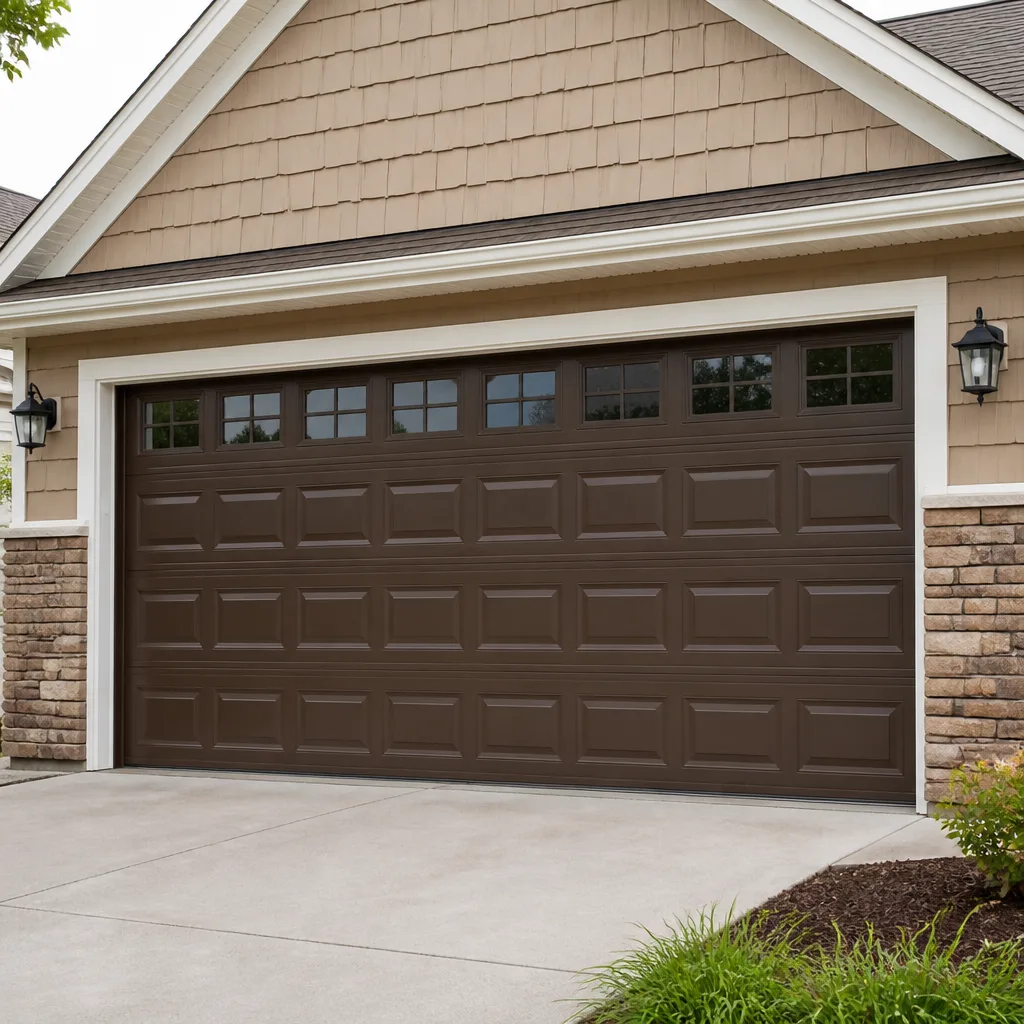 Raised-panel steel
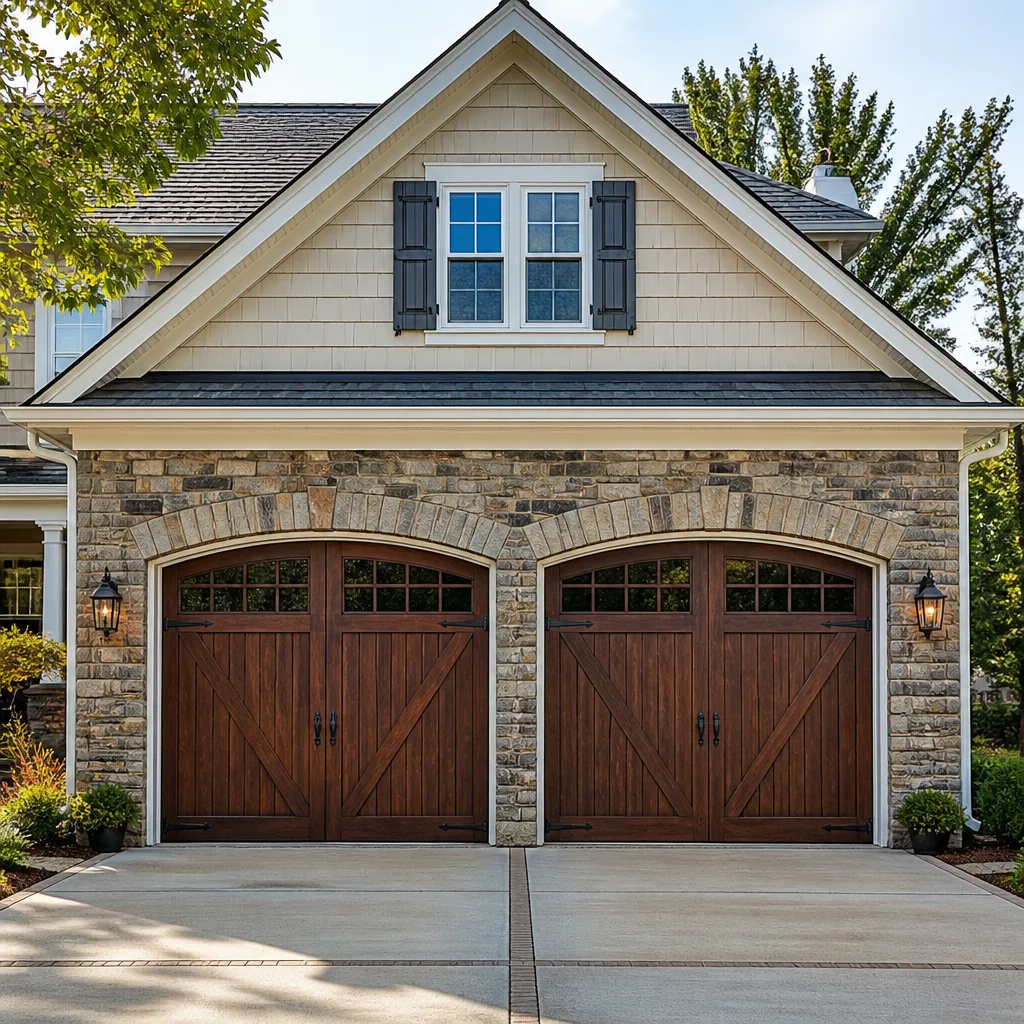 Carriage house
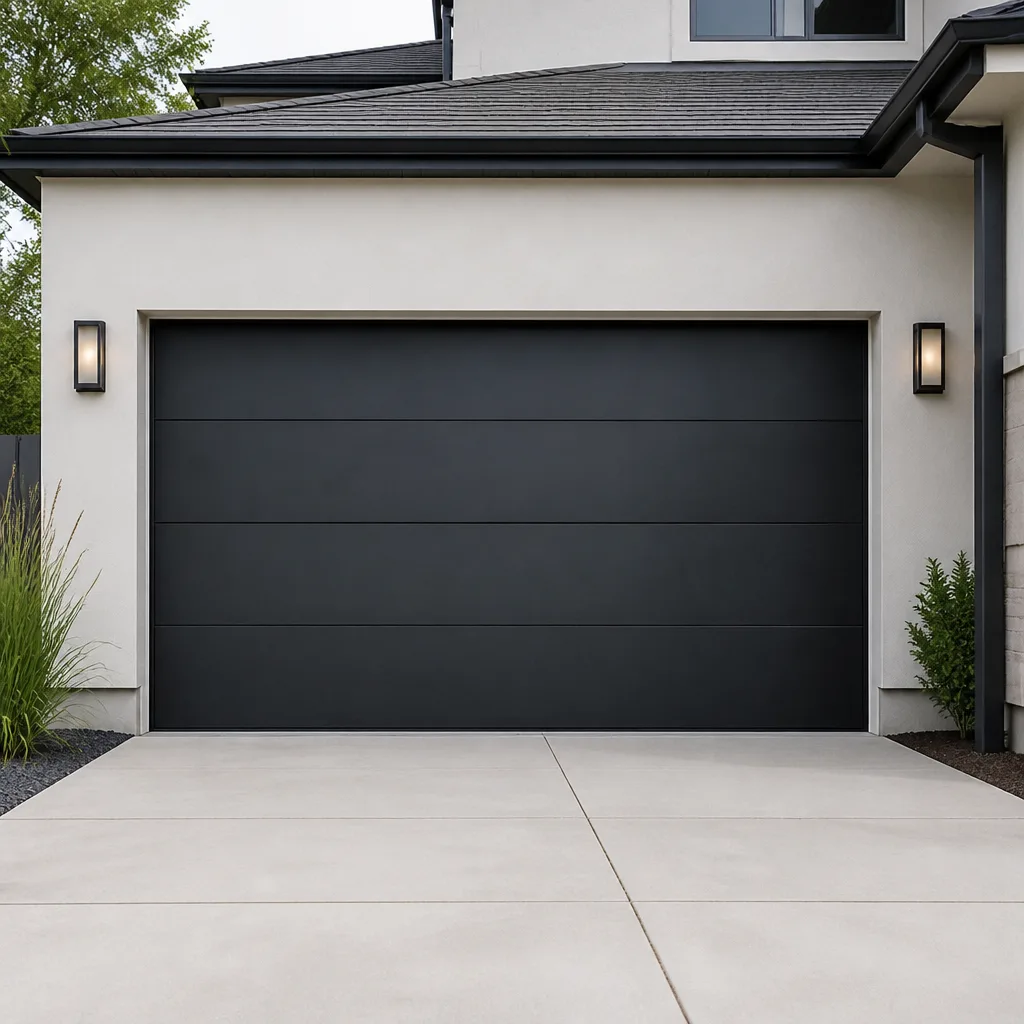 Modern flush
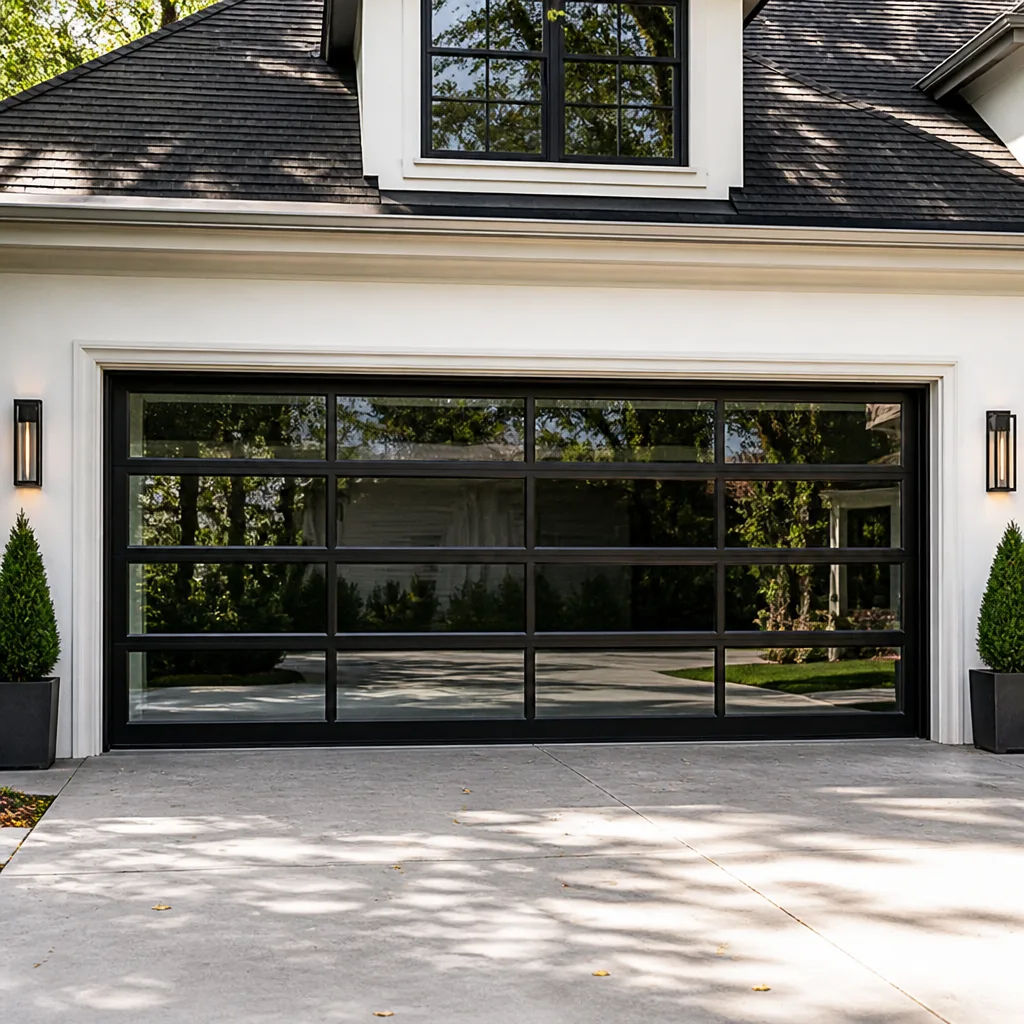 Full-view glass
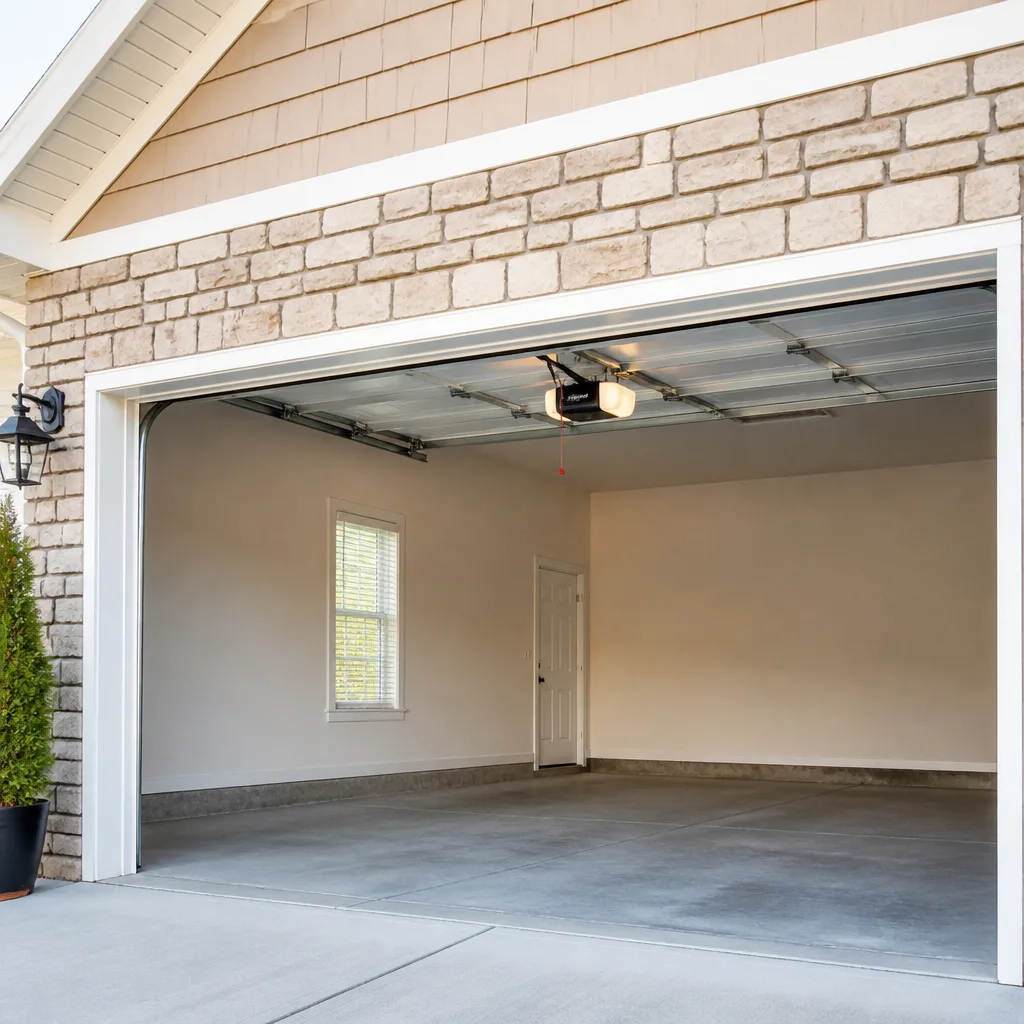 LiftMaster openers
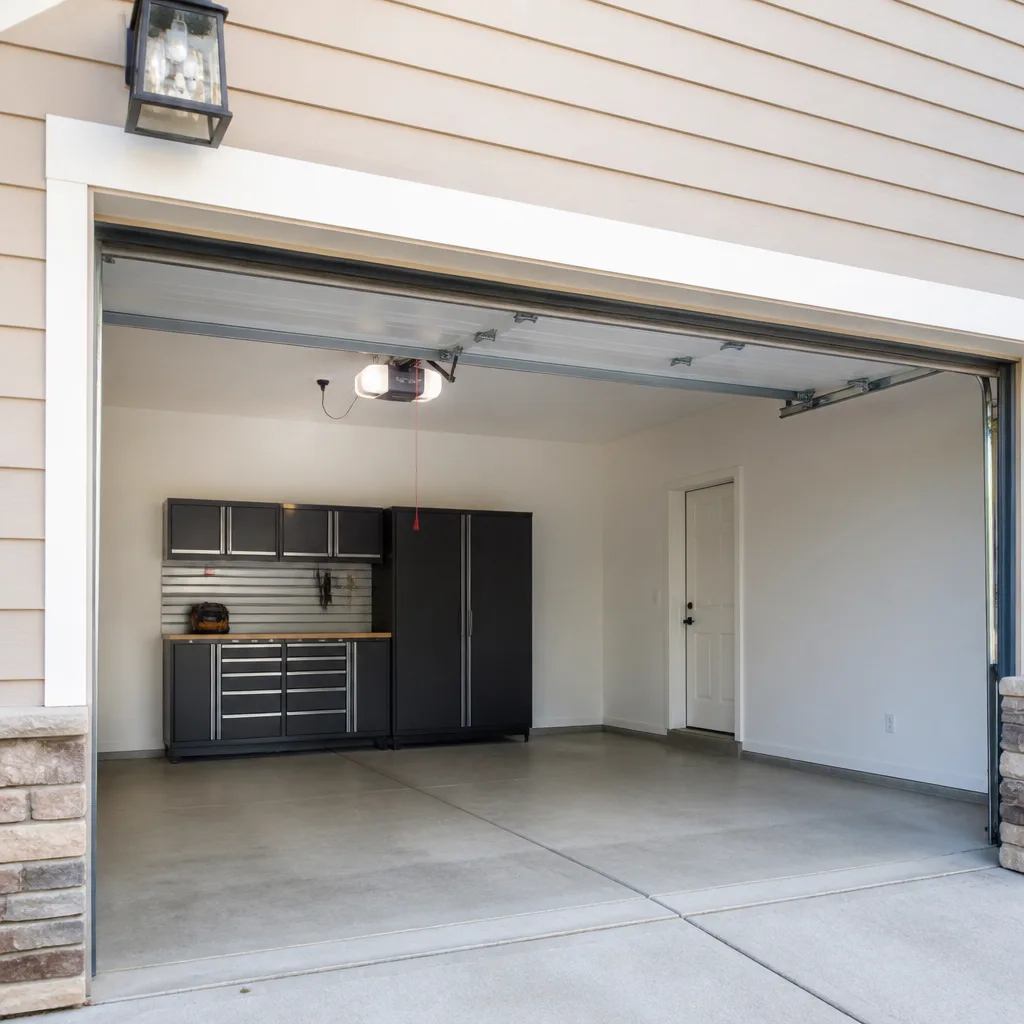 Chamberlain openers
Full 25-point door and opener safety check with every visit - springs, cables, rollers, tracks, and your LiftMaster or Chamberlain opener included
You get a price before we start. It does not change when the pro arrives.
Get your free estimateThe Complete Guide to Garage Doors in Hyde Park
Most Hyde Park homes were built before the modern sectional door existed. That single fact explains a lot of what goes wrong in this neighborhood’s garages. A house from the 1920s or 1940s was framed for a door that opened as one solid slab swinging or tilting outward, not for the four or five hinged panels that sit behind the opening today. When those homes were later retrofitted with sectional doors and overhead tracks, the hardware got bolted onto headers and jambs that were never planned around it. The result is thousands of Hyde Park garages running on a mix of systems that only roughly agree with each other.
This guide walks through what that means when something breaks, when you want to add insulation, or when you’re ready for a new door. We’ll cover sizing, the door types still common in the neighborhood, opener compatibility with the older wiring you’re likely to find, why spring type is dictated by the structure rather than personal taste, and how the New England climate affects the whole assembly. If you want the short version first, we’ve put it right below. If you want the practical detail, keep reading.
Quick Answer
A garage door in Hyde Park needs to match the structure it hangs in, not the other way around. Older homes here often have a low or irregular header, narrow lots that limit swing clearance, and one-piece tilt-up doors that go back decades. The right replacement or repair plan starts with measuring the opening and checking the header, the track clearance, and the existing wiring before anyone talks about brands or panels. The best guide you’ll read about garage doors is written for Hyde Park’s housing stock specifically.
Styles & brands we work with
- Raised-panel steel
- Carriage house
- Modern flush
- Full-view glass
- LiftMaster openers
- Chamberlain openers
Table of Contents
- Why Hyde Park’s Housing Stock Changes Everything
- Door Sizing and Header Clearance in Older Hyde Park Garages
- Sectional vs. One-Piece Tilt-Up: What You Have and What It Means
- Insulation for Hyde Park Winters: Polyurethane vs. Polystyrene
- Opener Compatibility With Older Wiring and Detached Garages
- Why Spring Type Follows Structure, Not Preference
- Parts, Wait Times, and Why Access Matters Here
- Season-by-Season Care Through a Hyde Park Year
Why Hyde Park’s Housing Stock Changes Everything
Hyde Park’s housing runs heavily pre-1970s. On many blocks the garages were built as afterthoughts, tucked behind the house or set off a narrow driveway that was itself an add-on. A garage built for a simple tilt-up door has a different ceiling height, header beam, and jamb depth than one built around a sectional system. In our experience, that mismatch causes more repair calls in Hyde Park than any single worn-out component.
Here’s what tends to show up:
- Low headroom above the opening, which limits the kind of track and door profile that will fit without blocking the opening.
- Headers that are solid but positioned for an outward-swinging door, so a sectional’s horizontal track has to be mounted in a spot nobody planned for.
- Narrow driveways and lots that leave very little room for a door to swing or for a technician to set up a ladder safely.
- Detached garages with electrical runs that were added decades later and don’t match the amp rating a modern opener expects.
- Uneven or cracked concrete aprons, so a new door’s bottom seal doesn’t sit flush without some adjustment.
None of that is a reason to skip an upgrade. It’s a reason to measure carefully and plan the install as a fit-to-structure job. If you’re starting with a repair rather than a replacement, our garage door repair page covers the diagnosis side.
Door Sizing and Header Clearance in Older Hyde Park Garages
Door sizing in Hyde Park starts with the opening, not a catalog. Standard modern widths and heights assume a frame built to those dimensions. Many older Hyde Park garages weren’t. When you’re planning a replacement, the measurements that matter are the rough opening, the header height, and the clearance from the top of the opening to the ceiling.
Here’s the sequence we use when sizing a job:
- Measure the opening at the widest point and at the height on both sides, since older frames can be out of square by an inch or more.
- Check the header for its height above the opening and whether a sectional door’s horizontal track will have room to run back into the garage.
- Measure headroom from the top of the door to the ceiling. Low headroom calls for a different track configuration or a low-headroom door.
- Look at the jamb depth to see how much of the door edge the frame will cover.
- Check the floor for drop or slope under the opening, since the bottom seal needs to meet the concrete evenly.
- Confirm the electrical at the ceiling for the opener and any safety sensors.
Getting those six things right before ordering a door is what keeps a Hyde Park installation from turning into a return-and-refit cycle. If your garage is a detached structure and you’ve been quoted a door without those checks, ask for the measurements in writing. For the install side, see our garage door installation page.
Sectional vs. One-Piece Tilt-Up: What You Have and What It Means
Two door types still dominate Hyde Park garages: the sectional door that rolls up on tracks, and the one-piece tilt-up that swings out and up in a single panel. Both are still working in the neighborhood, and the difference drives everything from cost to how a repair proceeds.
Sectional doors are what most modern installations use. They’re made of panels hinged together that ride in vertical and horizontal tracks. They take up less overhead room in the open position, which is a real advantage in a low-ceiling Hyde Park garage, and individual panels can be replaced if one gets damaged. Their tracks, hinges, and rollers do need regular attention.
One-piece tilt-up doors are the style you still see on many older Hyde Park homes, sometimes called canopy doors. They sit flush when closed and swing out and up into the driveway when opened. They need less overhead space but more driveway clearance, and their pivot and spring hardware is different from anything on a sectional system. On narrow Hyde Park driveways, a tilt-up can put the door right where a car is parked, so park position matters.
What this means for replacement: switching from tilt-up to sectional is usually possible, and often a good idea for overhead clearance and insulation, but it isn’t a drop-in swap. The tracks, header, and ceiling hardware all change. Staying with a tilt-up keeps the original structure but limits panel replacement and insulation options. Whichever direction you go, a technician should confirm the structure supports it before anything is ordered.
Insulation for Hyde Park Winters: Polyurethane vs. Polystyrene
An insulated door matters more in Hyde Park than in a milder climate, because a garage attached to the house acts as a thermal buffer all winter. The two core materials you’ll see are polystyrene and polyurethane, and the difference is worth understanding before you buy.
- Polystyrene is the more economical option. It’s a rigid foam board inserted into the door panels. It does reduce heat loss, but it leaves small gaps along the panel edges, so its insulating performance is lower than polyurethane at the same thickness.
- Polyurethane is a denser foam that’s injected into the panel and cures to fill the panel cavity, so there are no edge gaps. It insulates better at a given thickness and adds rigidity to the panel.
A few practical notes for Hyde Park homes:
- If the garage shares a wall with living space, insulation helps slow heat loss through that shared wall.
- If the garage is detached, insulating the door still helps if you use the space as a workshop or for storage that needs to stay above freezing.
- Panel thickness and core material both affect weight, and a heavier door needs the right spring and opener to counterbalance it. That’s a balance question, not a shopping question.
- A proper perimeter seal, including the bottom seal and the side and top stops, matters as much as the core. A well-insulated panel in a leaky frame is still a drafty door.
When you’re comparing doors, ask for the core material and the panel thickness together, and check whether the door’s weight was factored into the spring specification. An installer who skips that step leaves you with a door that fights its opener all winter.
Opener Compatibility With Older Wiring and Detached Garages
Opener work in Hyde Park usually starts with the wiring, not the motor. Many detached garages in this neighborhood were wired long after they were built, often with a simple circuit for a light and an outlet. A modern opener expects a dedicated circuit and a grounded outlet at the ceiling, and it wants safety sensors on both sides of the door. When those aren’t there, the job is as much about the electrical setup as the opener itself.
Here’s what we check before recommending an opener:
- Outlet and circuit: confirm there’s a grounded outlet near the opener mount and that the circuit can carry the motor and the light.
- Ceiling mount: look at how the ceiling is framed. Older detached garages may have exposed rafters or a shallow ceiling that changes how the opener rail is mounted.
- Sensor placement: the sensors need clear sight across the door opening and a path for their low-voltage wire back to the motor.
- Door balance: an opener should never be asked to lift a door that the springs aren’t balancing. Check the door first, then the opener.
- Brand and compatibility: whether the existing unit is a LiftMaster, a Chamberlain, a Genie, or an older Craftsman, the remote and keypad ecosystem follows the brand. We work on the opener you already have and match replacements to it where that makes sense.
On a detached Hyde Park garage, a smart opener that ties into WiFi is only useful if the WiFi signal reaches it, which is worth checking before you buy. For opener diagnostics and repair, our garage door opener repair page has the specifics.
Why Spring Type Follows Structure, Not Preference
Spring type is decided by the garage’s structure, not by what you’d prefer. There are two main systems. Torsion springs mount on a shaft above the door and do the lifting work with a twisting motion. Extension springs run along the horizontal tracks on each side and stretch as the door closes.
Which one your Hyde Park garage can take comes down to the header and the ceiling:
- Torsion systems need a solid header or a mounting point above the door and enough clearance for the shaft and drums. Where there’s room and structure, torsion is the more durable setup and is what most new installations use.
- Extension systems are common on older doors and low-headroom garages, because they mount along the tracks rather than above the door. They work, but they stretch over time and require safety cables to contain a broken spring.
Springs are not a DIY job. A torsion spring under tension can release with enough force to cause serious injury, and an extension spring that breaks without a safety cable can fly across the garage. This is the one part of a garage door system where the right move is always to call a trained technician. Our technicians have up to 12 years of experience, and spring repair is one of the services we handle most often in Hyde Park. If a spring has broken, leave the door closed and call rather than trying to open it.
When a spring does fail, the fix isn’t just replacing the broken one. Springs are matched to the door’s weight, and a spring that’s undersized or mismatched will fail early. A matched pair is also usually replaced together, because the second spring is typically near the end of its life too. Expect a price for one spring, and roughly double that for a matched pair.
Parts, Wait Times, and Why Access Matters Here
Most garage door repairs come down to a small set of components: rollers, hinges, cables, springs, bottom seals, and the opener’s gears, logic board, or safety sensors. When a part has to be ordered from a warehouse, a repair that should take an hour stretches across days, and the door sits unusable in the meantime. That’s why parts access matters as much as the repair itself.
We supply garage door parts directly, so a repair isn’t held up waiting on a third party to ship a hinge or a set of rollers. That applies across the brands this neighborhood actually has, including Craftsman, Raynor, LiftMaster, and Chamberlain equipment. What that means in practice:
- A common repair like a roller or hinge replacement gets done faster because the part doesn’t have to travel through a distributor first.
- Opener components for the major brands can be matched to what’s actually on your ceiling.
- If you’re a homeowner who wants to handle a simple part swap yourself, you can source the component and skip the markup that comes with a special order.
Get the part. Get it done. If a repair has been sitting because the last company had to order something, it’s worth a call to see whether the part is already available.
Season-by-Season Care Through a Hyde Park Year
A garage door in this climate goes through freeze and thaw cycles that work on the hardware in ways a milder place never sees. Cold contracts metal, ice works into the bottom seal, and road salt tracked in on the car can sit on the door’s steel at the bottom panel. A small maintenance rhythm goes a long way.
Spring, after the freeze: walk the door through a full cycle and listen. Grinding, squealing, or a door that bounces at the bottom is telling you something. Check the bottom seal for cracking or ice damage from the winter.
Summer: this is the good season for the jobs you’ve been putting off, like lubricating the hinges and rollers, checking the springs for visible wear, and testing the safety sensors. It’s also when a replacement or insulation upgrade is easiest to schedule, since the weather doesn’t fight you.
Fall, before the cold sets in: test the auto-reverse by placing a small object in the door’s path, check that the door closes flush against the floor, and look at the weather stripping around the frame. This is the time to catch a failing spring before a cold morning breaks it.
Winter: keep the bottom seal clear of ice, avoid forcing a door that seems stuck, and don’t leave a car parked in the swing path of a tilt-up door on a snowy driveway. If something breaks in the cold, stop using the door.
If you want to know where to start, our main Hyde Park Garage Door Repair Pros page lays out the full service range from repair to installation.
How Much Do Garage Door Repairs Cost in Hyde Park?
Garage door repairs in Hyde Park depend on the component and the door type, but the breakdown is fairly predictable once a technician looks at the system. Here are typical estimated ranges for the work we handle most often. The written estimate you get after diagnosis sets the final price, so treat these as a planning guide rather than a quote.
| Service | Typical Estimated Range |
|---|---|
| Torsion spring replacement (one spring) | $180 to $340 |
| Torsion spring replacement (matched pair) | Roughly double the single-spring range |
| Extension spring replacement (per side) | $140 to $260 |
| Roller, hinge, or cable repair | $120 to $280 |
| Opener repair (gear, board, or sensor) | $150 to $350 |
| New opener installed | $320 to $650 |
| Bottom seal replacement | $90 to $180 |
The thing homeowners worry about most, after the total, is whether the invoice will come in higher than the quote. It won’t. We quote the price and agree it with you before any work starts, so the number you approve is the number you pay. Get a free estimate by calling (877) 716-7297.
See the difference
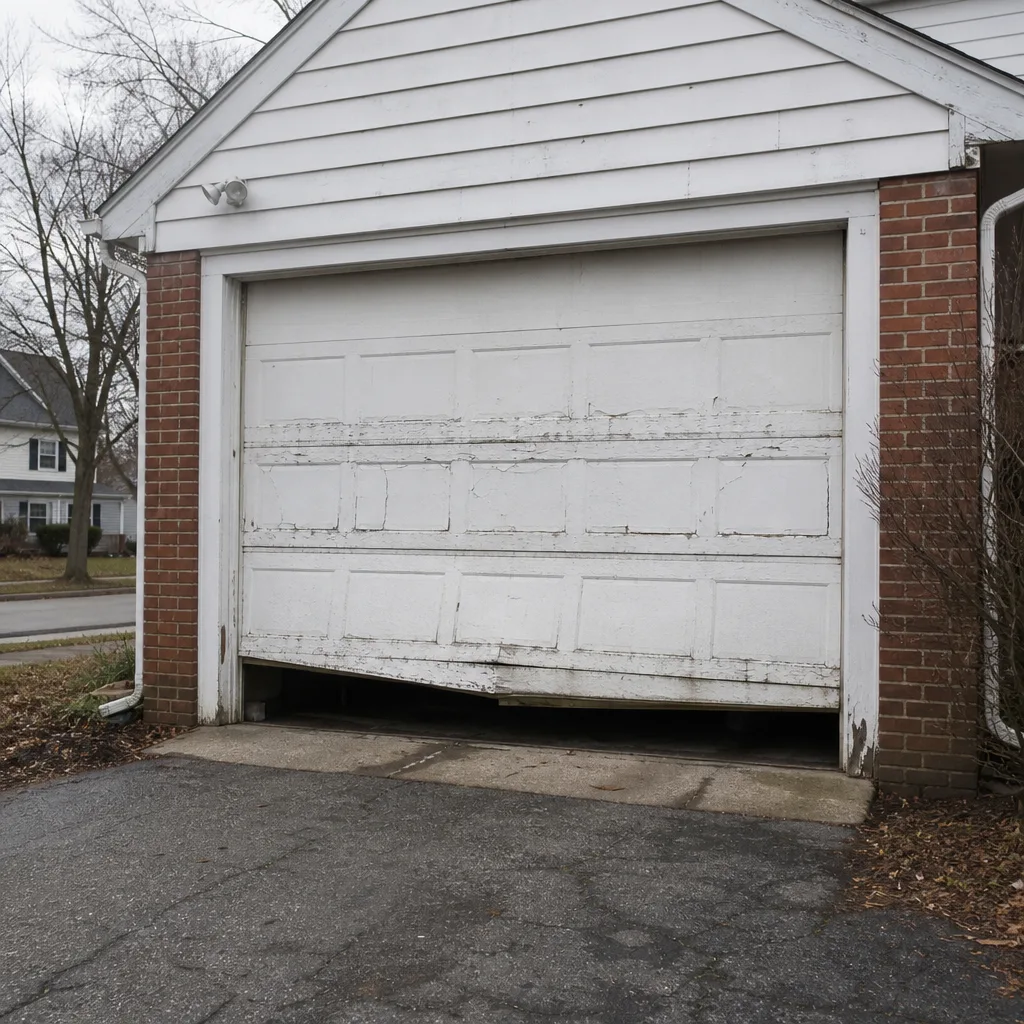 Before
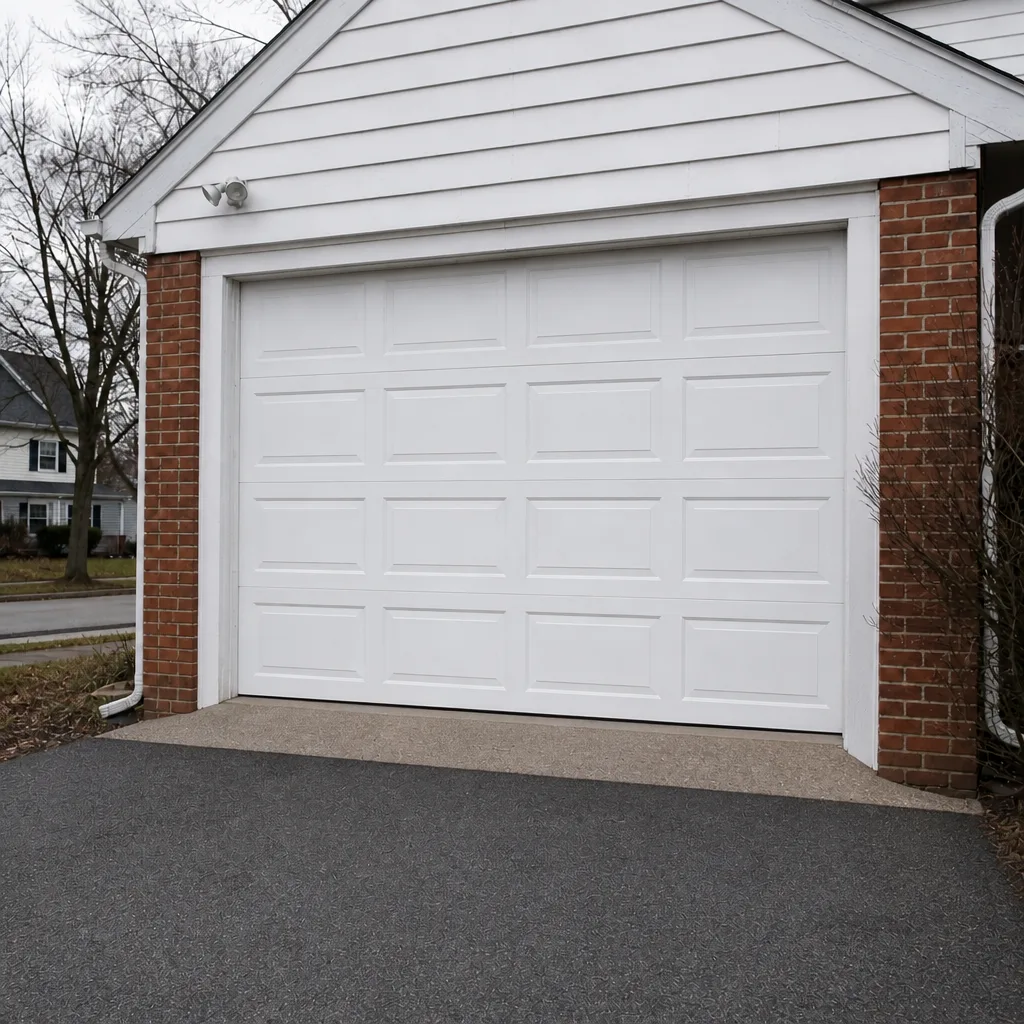 After
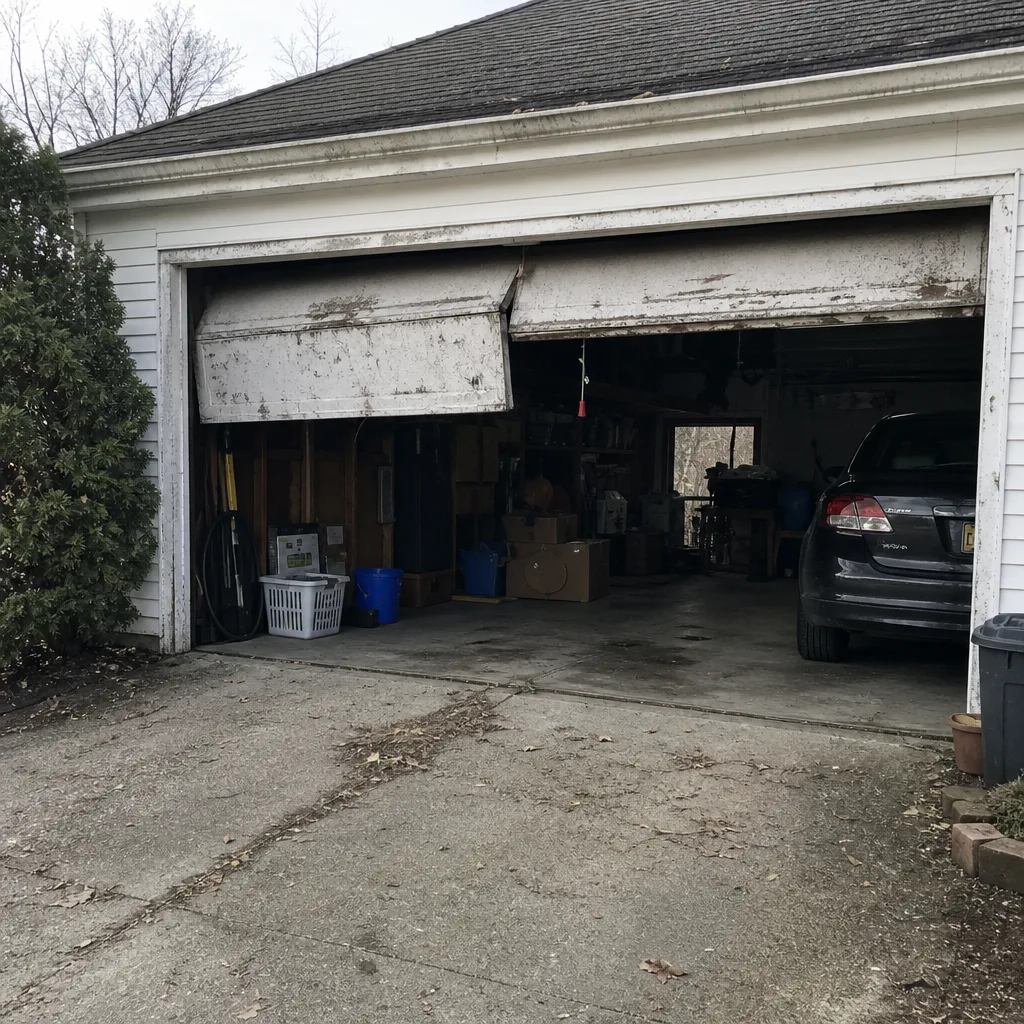 Before
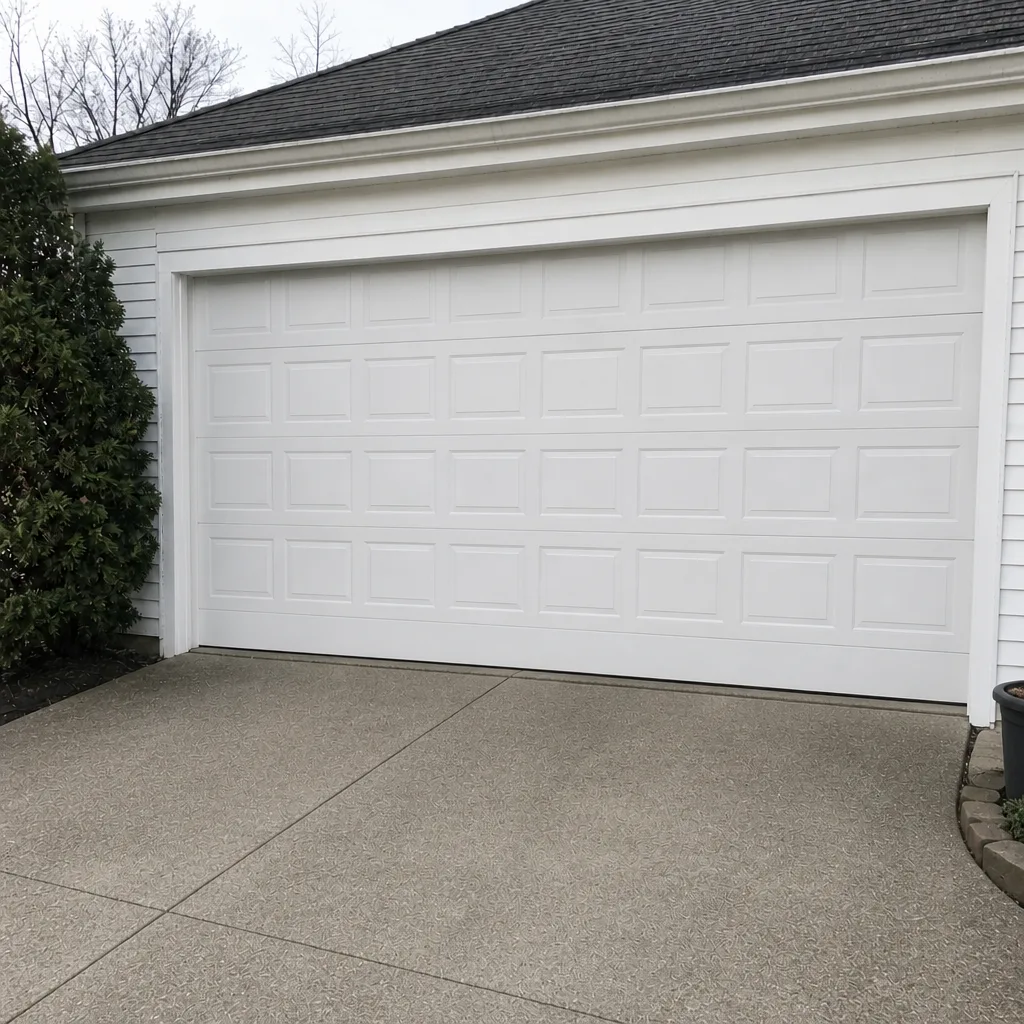 After
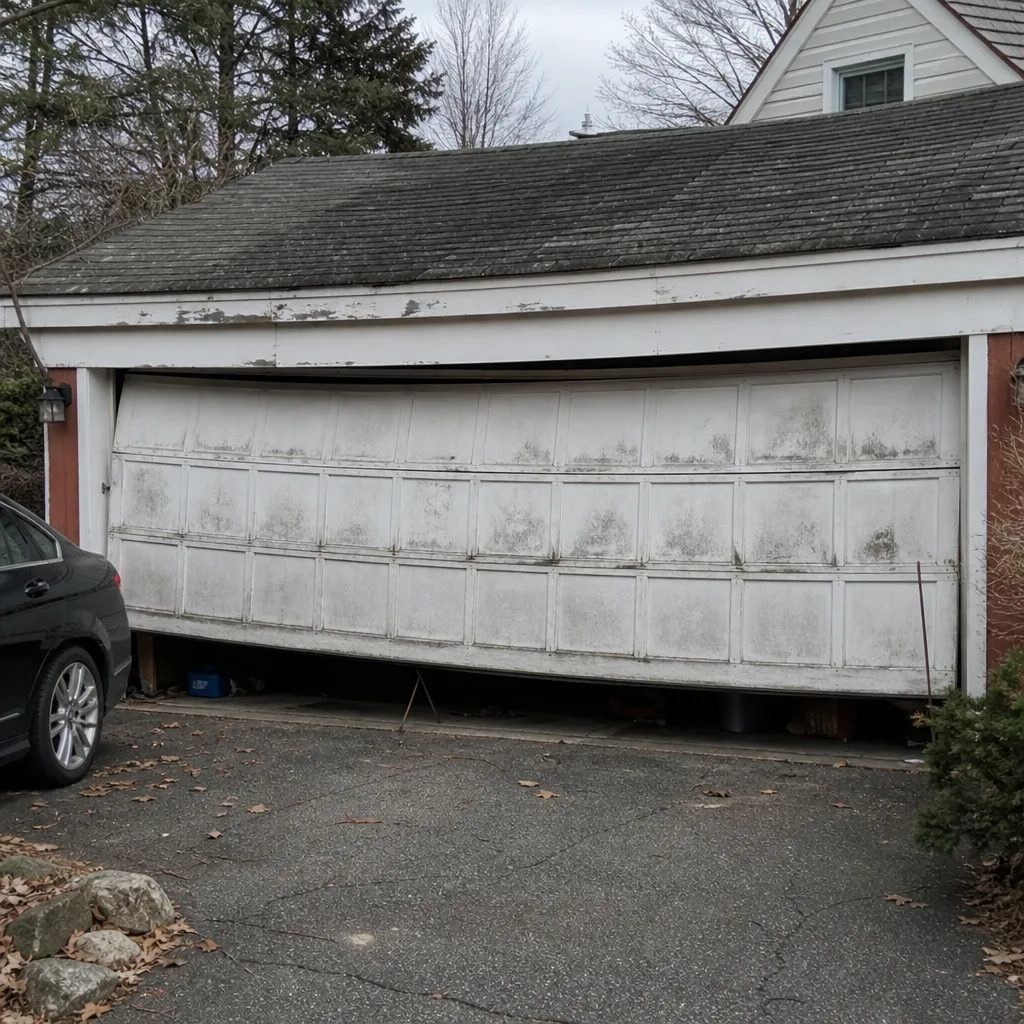 Before
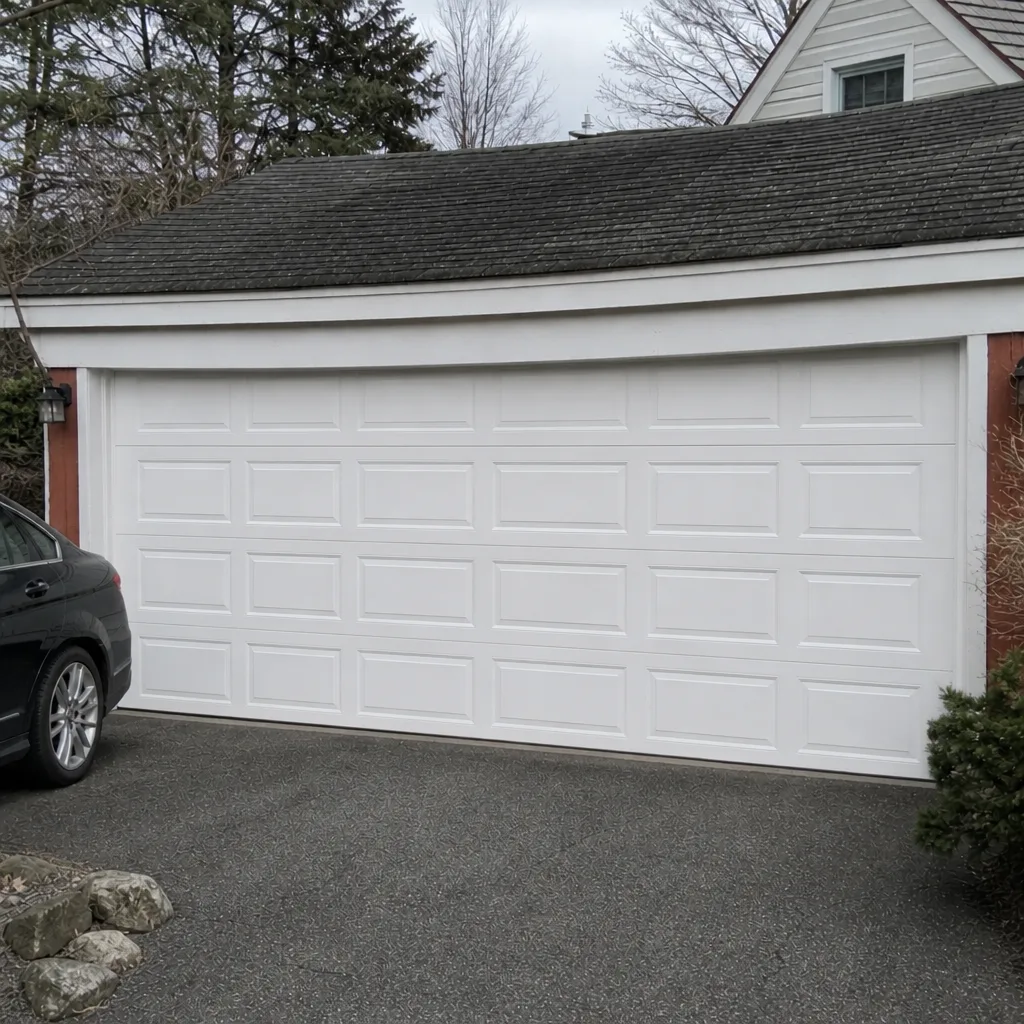 After
Common Mistakes to Avoid
- Buying a door by dimension without checking the header. A standard size that doesn’t fit the frame is a bigger problem than a non-standard size that does. Measure the opening and headroom before you order anything.
- Assuming a tilt-up door can be swapped for a sectional without track changes. The tracks, header, and ceiling mounts all change with the door type. Treat it as a full install, not a component swap.
- Trying to adjust a torsion spring yourself. Springs are under extreme tension. A slip can cause serious injury, and a poorly seated spring can fail later. Leave spring work to a technician.
- Replacing an opener without checking door balance. If the springs aren’t carrying the door’s weight, a new opener will strain and wear out early. Fix the balance first.
- Insulating the panel and skipping the perimeter seal. A well-insulated door with a leaky bottom seal still loses heat. The seal, the stops, and the bottom weather strip all matter.
- Ignoring cable wear. Cables on older Hyde Park doors are often the original ones from decades ago. Cables fray where they can’t be seen, and a snapped cable can drop the door. Have them checked during any repair.
- Ordering a part before confirming the system. An extension spring and a torsion spring aren’t interchangeable, and neither are the opener components across brands. Confirm the system before you order.
When to Call a Professional
Some garage door problems are cosmetic, and some need a technician the same day. Call a professional if the door won’t open or close, if you hear a loud snap from the spring area, if the door hangs crooked or sags on one side, if the opener runs but the door doesn’t move, if a cable looks frayed, or if the door reverses unexpectedly or won’t stay down. A door that’s off-balance or stuck puts weight on components that weren’t designed to hold it, and using it that way turns a small repair into a larger one.
Repairs are often something we can handle the same day, and there’s fast dispatch from 7am to 7pm. Installation and replacement are a measured, ordered, and scheduled job, so book a free measure and a written price rather than expecting same-day. Hyde Park Garage Door Repair Pros offers free estimates in Hyde Park. Call (877) 716-7297.
Frequently Asked Questions
Not necessarily. Many older Hyde Park garages do fit standard door sizes, but the rough opening, header height, and headroom need measuring first. If the opening is out of square or the headroom is low, a low-headroom track or a different door profile can usually solve it. The important thing is to measure before ordering, not after.
Usually, yes. The structure almost always supports a sectional door once the tracks and header hardware are planned around it. It isn’t a direct swap, though: the horizontal tracks, ceiling mounts, and often the opener mount all change. A measure-and-plan visit will confirm whether the header and headroom are right for a sectional before anything is ordered.
It comes down to the structure, not preference. If your garage has a solid header and enough headroom above the door, a torsion system is generally the more durable setup. Low-headroom and older garages often use extension springs because they mount along the tracks. A technician can tell you which one your garage was framed for, and both are repairable.
Yes, especially on a garage that shares a wall with the house or is used as a workspace. Polyurethane-cored panels insulate better than polystyrene at the same thickness because the foam fills the panel with no edge gaps. The door’s perimeter seal matters too, since a well-insulated panel in a leaky frame still loses heat. Ask for the core material and thickness together when comparing.
The most common causes are a broken spring, a snapped cable, a stripped drive gear in the opener, or a door that’s come off its track. If the door is holding its own weight, the opener isn’t the root problem. Stop using it and have the door checked before you replace the opener, since a new unit won’t fix a balance issue.
Often, yes. We supply garage door parts directly, so homeowners can source a component without the third-party markup that comes with a special order. The key is matching the part to the system: extension springs, torsion springs, and opener components aren’t interchangeable, so confirm what your garage actually has before you order. If you’re unsure, a quick call will sort it out.
The Bottom Line
A garage door in Hyde Park is a fit-to-structure job first and a product choice second. The homes here were built before the modern sectional door, which means the hardware you have now may have been added to a frame designed for something else. The starting point is measuring the opening, checking the header and headroom, and confirming the wiring and door type. Everything after that, whether it’s a spring repair, an opener replacement, insulation, or a full new door, follows from that groundwork.
We work on the brand you already have, across LiftMaster, Chamberlain, Genie, Clopay, Amarr, Wayne Dalton, Craftsman, and Raynor equipment, and we approach repairs as repairs before suggesting a replacement. Our technicians have up to 12 years of experience. If you want a straight answer on what your garage needs, call (877) 716-7297 for a free estimate.
Written by the team at Hyde Park Garage Door Repair Pros.