Last updated November 21, 2026
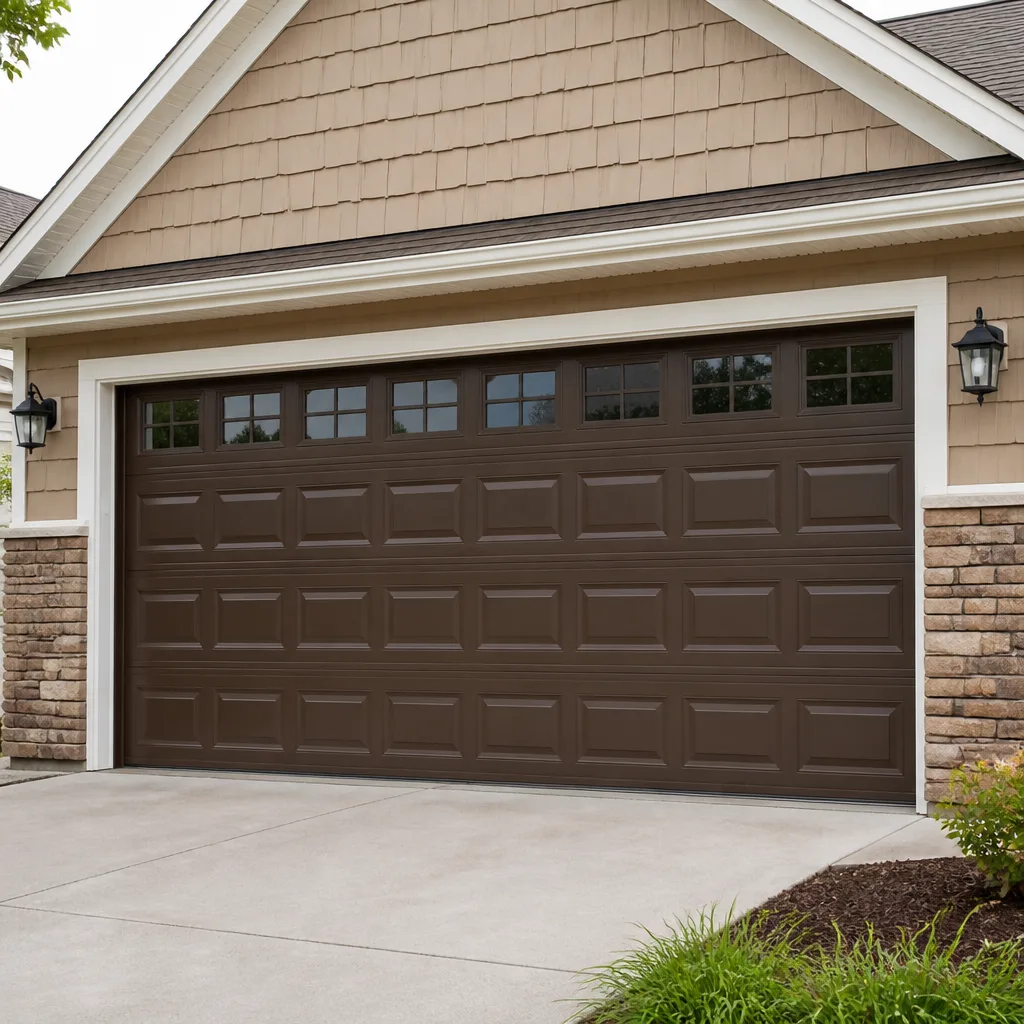 Raised-panel steel
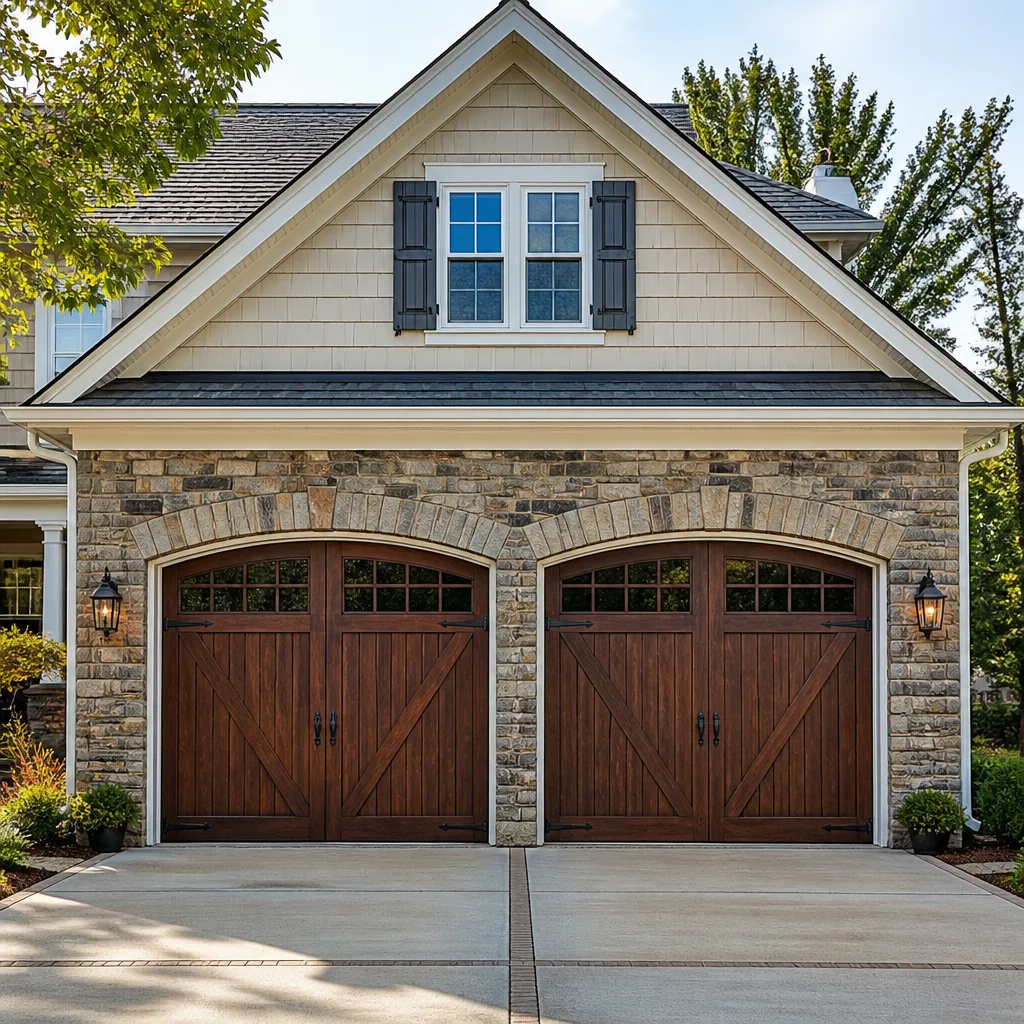 Carriage house
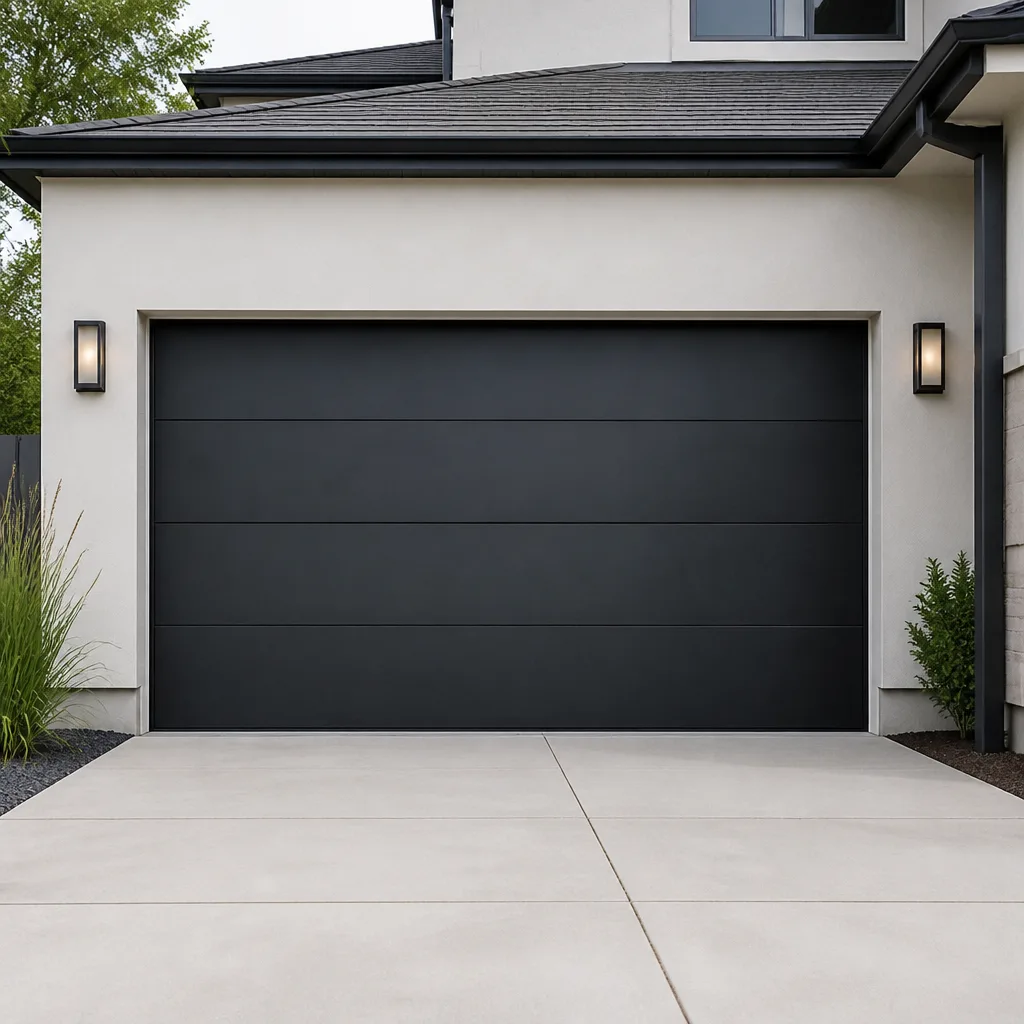 Modern flush
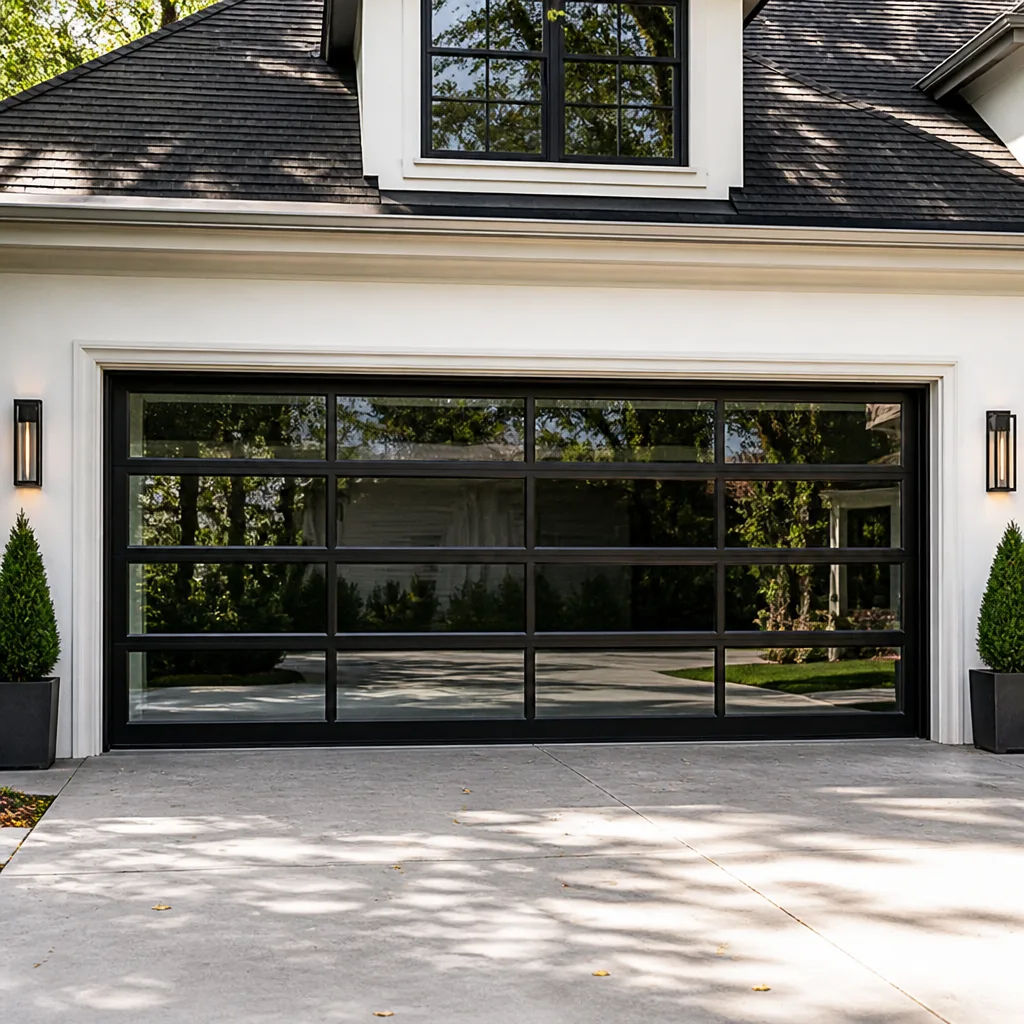 Full-view glass
 LiftMaster openers
 Chamberlain openers
Full 25-point door and opener safety check with every visit - springs, cables, rollers, tracks, and your LiftMaster or Chamberlain opener included
You get a price before we start. It does not change when the pro arrives.
Get your free estimateDIY vs Professional Garage Door: The Hyde Park Homeowner’s Decision Guide
A torsion spring is a coiled steel bar holding hundreds of pounds of stored rotational force, and it looks like a simple coil. That gap between appearance and physics is why so many homeowners reach for a wrench on a component that can break a wrist the moment tension slips. Garage doors aren’t like a sticking cabinet hinge or a dripping faucet. Some tasks are truly safe to handle yourself, and a few are not, no matter how many tutorials you’ve watched. This guide draws a hard line between the two based on physics and consequence, not preference, so you can fix what’s safe in your Hyde Park home and hand off the rest with confidence. We’ll cover what each component is holding under load, which fixes you can do in an afternoon, and how to weigh a parts kit against a service call without getting surprised later.
Quick Answer
Handle lubrication, weather stripping, sensor alignment, and remote reprogramming yourself. Never touch torsion or extension springs, cable adjustments, or track realignment under tension; those components store enough energy to cause serious injury, and they require measurements (spring size by door weight, cable drum position, torque) that a tutorial can’t give you. Everything in between comes down to one question: does the job involve releasing or adjusting stored mechanical force? If yes, call a professional.
Styles & brands we work with
- Raised-panel steel
- Carriage house
- Modern flush
- Full-view glass
- LiftMaster openers
- Chamberlain openers
Table of Contents
- What garage door springs are actually holding under load
- Safe DIY tasks you can do this week
- Never-DIY tasks and the risk each one carries
- A DIY parts kit vs. a professional service call
- What “I watched the whole tutorial” doesn’t cover
- What garage door work typically costs in Hyde Park
- How Hyde Park weather affects your door
- How to choose a garage door pro in Hyde Park
What garage door springs are actually holding under load
Garage door springs are not shock absorbers. They’re counterweights. A residential door can weigh well over a hundred pounds, and a torsion spring on the header above the opening stores enough rotational energy to lift that weight in one smooth motion. When the door is closed, the spring is under maximum tension. When the door is open, that tension unwinds into the cables and drums. At no point during the cycle is the spring safe to touch without first relieving that stored force, and relieving it correctly means using the right tools on the right winding bars while the door is in the correct position.
Extension springs, common on older doors, work differently. They stretch along tracks above the door and hold tension linearly. They’re under load anytime the door is down, and a snapped extension spring can whip through its safety cable if the cable is missing or worn. That’s why the cables matter as much as the springs themselves.
What separates garage door springs from other home repairs is simple: most fixes let you cut power, shut off water, or step away when something goes wrong. Spring repair has no off switch. The energy is already stored, and it releases in less than a second. There’s no partial success, no “let me think about this.” Either the spring is wound to spec or it isn’t, and the window between those two states is where injuries happen.
Our technicians have up to 12 years of experience, and spring repair is one of the jobs we treat with the most caution. That’s not because it’s complicated in concept. It’s because the margin for error is measured in millimeters of bar placement and fractions of a turn.
Safe DIY tasks you can do this week
Plenty of garage door maintenance is genuinely safe and worth doing yourself. None of it involves releasing stored force. Here’s what you can handle without risk, in rough order of how often it needs doing:
- Lubrication. Wipe down each hinge, roller stem, and pivot point with a rag, then apply a garage-door-specific lubricant (silicone or lithium grease, not WD-40). Do the same for the torsion spring coils, lightly; a dry spring can bind and squeal. Work the door up and down a couple of times to distribute it. This takes fifteen minutes and quiets most squeaks.
- Weather stripping replacement. The bottom seal on your door and the perimeter stripping around the frame both wear out from friction and temperature swings. Peel the old strip off, clean the channel, and press in a new one cut to length. The bottom seal slides into a track on the door bottom; the side and top strips press into a retainer on the frame. Both are straightforward with a utility knife and a tape measure.
- Sensor alignment. If your door closes partway and reverses, the safety sensors near the floor are probably out of line or blocked. Wipe both lenses, check for cobwebs or a shifted bracket, and adjust each sensor until its indicator light is steady. The two sensors need to see each other across the opening, roughly six inches off the floor.
- Remote and keypad reprogramming. Lost a remote or changed the code? Every opener brand has a pairing sequence: press the learn button on the motor head, then hold the remote button until the opener clicks or the light flashes. Chamberlain and Genie units both follow this pattern with small differences in button location. Your manual, or the inside of the motor housing cover, tells you which.
- Visual inspection. Once a month, look at the springs for gaps or rust, the cables for fraying, the rollers for flat spots, and the tracks for dents. You’re not fixing anything here, just catching problems early enough to schedule a repair before the door stops moving.
These tasks keep a door running smoothly and help you spot trouble before it becomes a same-day emergency. The one thing they don’t do is touch the components that hold the door’s weight. For those, you’ll want garage door repair from someone who works on springs and cables regularly.
Never-DIY tasks and the risk each one carries
Some garage door work belongs to trained technicians, full stop. Not because homeowners aren’t capable, but because the specific failure mode of each job is injury or structural damage that happens faster than anyone can react. Here’s what to leave alone and why:
- Spring replacement (torsion or extension). This is the big one. A torsion spring must be unwound with two winding bars before removal, and each bar holds tension that can throw it across the room if it slips. Extension springs carry similar risk. A single wrong turn can release the full stored force into your hands or face. No tutorial prepares you for the physical feel of a bar under load, and there’s no safe way to practice.
- Cable adjustment or replacement. Cables run from the spring system down to the bottom corners of the door and are under constant tension. A cable that slips off its drum while you’re handling it can snap back with enough force to cause deep lacerations or worse. Cables also need to be seated in the drum at the correct starting position, which is a measurement job, not a visual one.
- Track realignment under tension. A bent track can sometimes be persuaded back into shape, but only with the door’s weight fully supported and the springs relieved. Bending a track while the door hangs on it risks the door dropping off its rollers, and a falling sectional door is heavy enough to cause serious injury. Track work is rarely a one-person job even for pros.
- Bottom bracket and drum work. The bottom bracket anchors the cable at the door’s lower corner, and it’s under load any time the door is down. Loosening it without relieving spring tension can send the cable and bracket flying. This is one of those parts that looks like a simple bolt-on and isn’t.
- Opener installation on a new door. Hanging a new opener involves setting the rail height, adjusting the force limits, and dialing in the travel distance. Get it wrong and the opener strains against the door, strips its gears, or fails to reverse on contact. New opener work belongs with the door installation itself.
If your door won’t open, makes a loud bang, or hangs crooked, don’t try to force it. That’s the moment to stop and call. Our team handles garage door opener repair and spring work as a specialty, and we can tell you over the phone whether you’re looking at a quick fix or a same-day job.
A DIY parts kit vs. a professional service call
A parts kit costs less on paper. The math changes when you factor in what a kit doesn’t include: the right spring for your door’s weight, the winding bars, the know-how to seat a cable correctly, and the diagnosis that tells you which part actually failed. Here’s how the two options compare across the factors that matter:
- Upfront cost. A torsion spring kit for a residential door typically runs a fraction of a professional spring replacement, and weather stripping or rollers are cheaper still. But a kit only covers the part; it doesn’t cover the labor or the tools.
- Correct sizing. Springs are sized by wire gauge, inside diameter, and length, matched to the door’s weight and height. Order the wrong one and the door either won’t balance or the spring fails early. A pro measures before ordering.
- Tools. Winding bars, a proper set of hand tools, and a way to safely support the door are all required for spring work. Most homeowners don’t own winding bars and shouldn’t buy them for a one-time job.
- Risk of incomplete repair. A kit that fixes the symptom but misses a worn cable or a bent track turns a modest repair into an emergency call later, often at a worse time. That hidden cost rarely shows up in the kit price.
- Parts availability. This is where a pro with direct parts access wins. When we source a part directly instead of waiting on a third-party order, the repair happens sooner and there’s no markup layered on top.
- Warranty and follow-up. A kit comes with a manufacturer’s warranty on the part only. A pro service call should include a clear explanation of what was replaced and why, so you know what to watch for next.
For the genuinely safe tasks on this list, a kit is a fine choice. Weather stripping and rollers are easy to source and easy to install. For springs and cables, the kit price is only the starting number, and the real cost of a wrong repair is the second call to fix it.
What “I watched the whole tutorial” doesn’t cover
YouTube tutorials show the sequence. They can’t show you the measurements and judgment calls that make the sequence safe. Three things in particular get skipped, and each one matters:
- Spring sizing by door weight. A tutorial shows someone winding a new spring, but it doesn’t tell you how to calculate the wire gauge and length your specific door needs. That’s determined by the door’s weight, its height, and whether it’s a one- or two-spring system. Get it wrong and the door won’t stay balanced at any point in its travel. A pro weighs the door and matches the spring, which is why the process looks slower than the video.
- Torque and winding turns. The number of turns it takes to balance a spring isn’t universal. It depends on the spring’s length and the door’s weight, and it’s usually written as a count of quarter-turns from a specific starting point. Guessing produces a door that slams or won’t close. Tutorials often show a number without explaining where it came from.
- Cable drum positioning. Cables need to seat in the drum at the right starting point so the door travels evenly on both sides. If one drum sits a rotation off, the door lifts crooked, and the opener strains against the imbalance. The correct position comes from measuring cable length against drum circumference, not eyeballing it.
There’s also the physical reality a video can’t convey: the resistance of a winding bar under tension, the way a door shifts when the weight comes off one side, the sound a spring makes right before it lets go. Those cues tell an experienced technician whether to keep going or stop. Without them, you’re working blind on a component with no room for error. In our experience, the jobs that go wrong most often are the ones where someone watched carefully and still missed a measurement.
What garage door work typically costs in Hyde Park
Typical garage door work in Hyde Park falls into a few predictable ranges, and the estimate you get in writing is what sets the final price. Here’s how the common jobs stack up, listed as estimates rather than fixed rates:
- Spring repair or replacement (one spring): typically $180 to $340. A matched pair is usually replaced together, so a pair costs roughly twice that. Door weight and spring type affect the range.
- Opener repair: typically $120 to $280, depending on whether it’s a sensor, gear, logic board, or remote issue. Smart openers from LiftMaster, Chamberlain, and Genie sometimes need a specific part, which is where direct parts access saves time.
- Cable replacement: typically $150 to $290 per cable, often done as a pair when both show wear.
- Roller and hinge replacement: typically $90 to $200 for a full set, a job many homeowners handle themselves with a kit.
- Track realignment: typically $100 to $250, more if a section has to be replaced.
- New door installation: varies widely with door size, material, and whether the opener is new. Clopay and Amarr both offer lines across a range of budgets, and a measure-and-quote visit is the only way to get a real number.
Every price we quote is agreed before any work starts, so there’s no gap between the estimate and the invoice. If a repair uncovers something extra, we explain it and get your approval before continuing. Call (877) 716-7297 for a free estimate on any job, and if the door is broken now, we can often get to it the same day. For a full replacement or a new door, we’ll schedule a free measure and give you a written price so you can plan.
How Hyde Park weather affects your door
Hyde Park’s winters do a specific kind of work on garage doors. Repeated freeze and thaw cycles move the ground and the door frame slightly, which can throw tracks out of alignment and pull hinges loose over a season. The salt and sand that get tracked onto the door’s bottom seal during winter grind against the seal and wear it faster than in milder climates. And the cold itself makes metal springs more brittle, which is why a spring that’s near the end of its life often lets go on the first cold morning of the year.
Summer humidity adds its own layer. Wooden door panels and frames absorb moisture and swell, which can bind a door in its tracks or make the weather stripping drag. Steel doors with older finishes can start to rust along the bottom edge, where moisture collects and doesn’t dry quickly.
The practical takeaway is seasonal: check your weather stripping and lubricate your moving parts before the first cold snap, and give the tracks a visual check as the seasons change. A door that runs smoothly in October is less likely to strand you in January. If something feels off, a quick garage door repair call before winter is cheaper than an emergency in a cold snap.
How to choose a garage door pro in Hyde Park
Not every company that repairs garage doors is a garage door company. A general handyman can hang a door, but diagnosing a spring that’s off-spec or an opener that’s straining against a misaligned track takes familiarity with the specific system in your home. Here’s what to look for:
- Brand familiarity. Ask whether they work on the brand you already have. LiftMaster, Chamberlain, Genie, Clopay, Amarr, Wayne Dalton, Craftsman, and Raynor all have their own quirks in springs, openers, and panel construction. A pro who works across these brands can diagnose the system you own instead of steering you toward one they prefer.
- Parts access. A company that can source parts directly cuts the wait for a specialty component. Ask where the part comes from and how long it takes to arrive.
- Written estimate before work. You should know the price before anyone touches the door. A clear written estimate protects you from a surprise invoice, and it’s a fair thing to ask for.
- Repair-first approach. A good pro tells you when a repair will do and when a replacement actually makes more sense. If the first answer is always “new door,” get a second opinion.
- Full-system capability. Some jobs start as one thing and turn out to be another. A company that handles opener work, springs, panels, and installation in one place saves you from calling three contractors for one problem. That’s what we do at Hyde Park Garage Door Repair Pros, which means the person who diagnoses the problem can also fix it.
If you’re considering a full replacement rather than a repair, a garage door installation visit starts with a free measure and a written price, not a same-day installation promise. Installation is measured, ordered, and scheduled, because the door has to match your opening and your opener.
Common Mistakes to Avoid
- Winding a torsion spring without winding bars. A screwdriver or a pair of pliers will slip under load, and a slipped bar is how most spring injuries happen. Buy or borrow the right bars or don’t start the job. In Hyde Park, we see this most often on doors that sat untouched through a winter and need a spring replaced quickly in spring.
- Replacing one spring of a matched pair. If both springs were installed together, they’ve cycled the same number of times and are likely to fail within weeks of each other. Replacing one usually means a second repair call shortly after. Replace the pair together unless the technician has a reason to do otherwise.
- Ordering a spring by sight. Springs with different wire gauges can look nearly identical. Sizing by wire gauge, inside diameter, and length against the door’s weight is the only reliable method, and a parts kit ordered by eye is a common reason a DIY repair doesn’t last.
- Ignoring a frayed cable because the door still opens. Cables fray from the inside out, and a cable that’s still working can snap without warning. If you see broken strands or a cable hanging loose from its drum, stop using the door and call a pro rather than waiting.
- Forcing a door that’s off its track. Pushing or pulling a crooked door can drop it off the rollers entirely, and a sectional door weighs enough to cause real injury. Leave it in place and get someone who can support the weight safely.
- Skipping the pre-winter check. A little lubrication and a new bottom seal in the fall cost far less than an emergency repair in a Hyde Park cold snap, when a brittle spring is most likely to let go.
- Assuming a YouTube fix covers your model. A tutorial for a Chamberlain opener may not match a Genie or a Craftsman unit, and the differences in learn buttons, force settings, and travel limits matter. Match the guide to your exact brand and model before starting.
See the difference
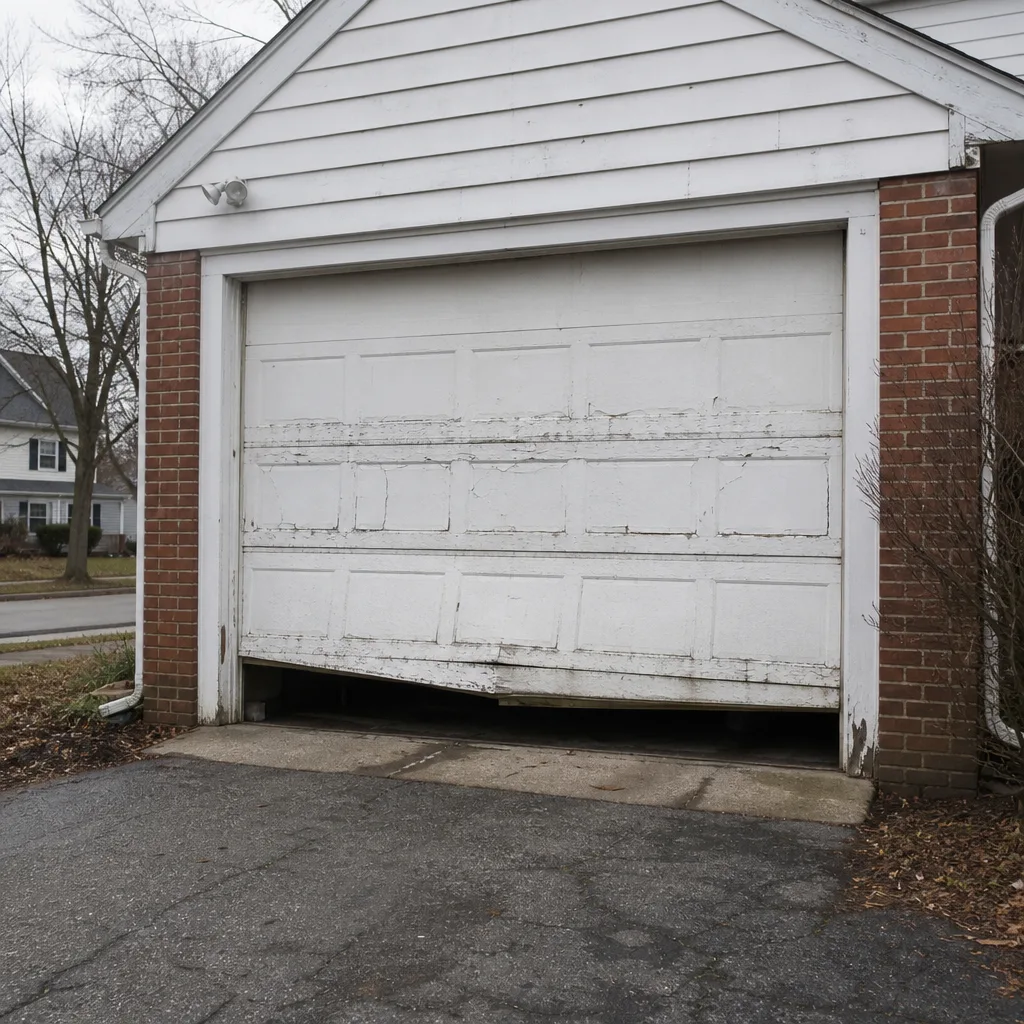 Before
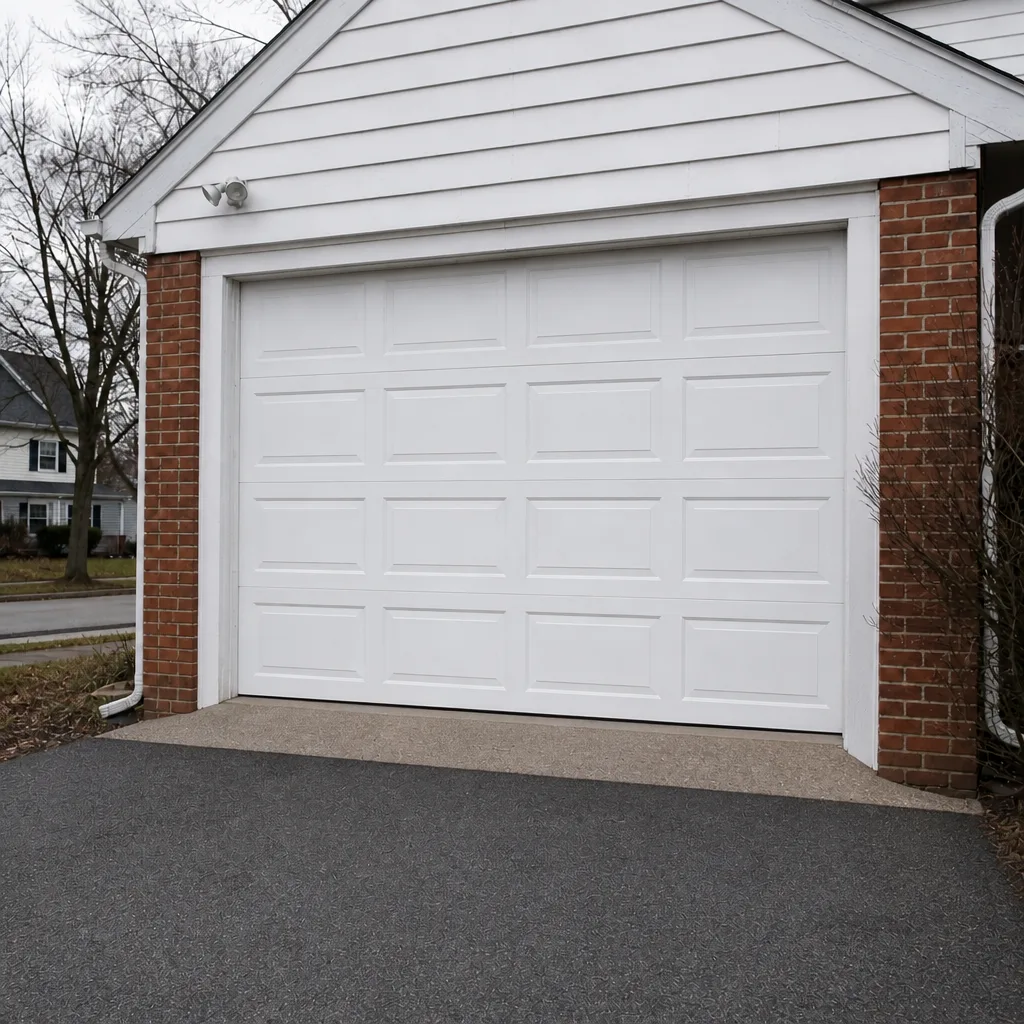 After
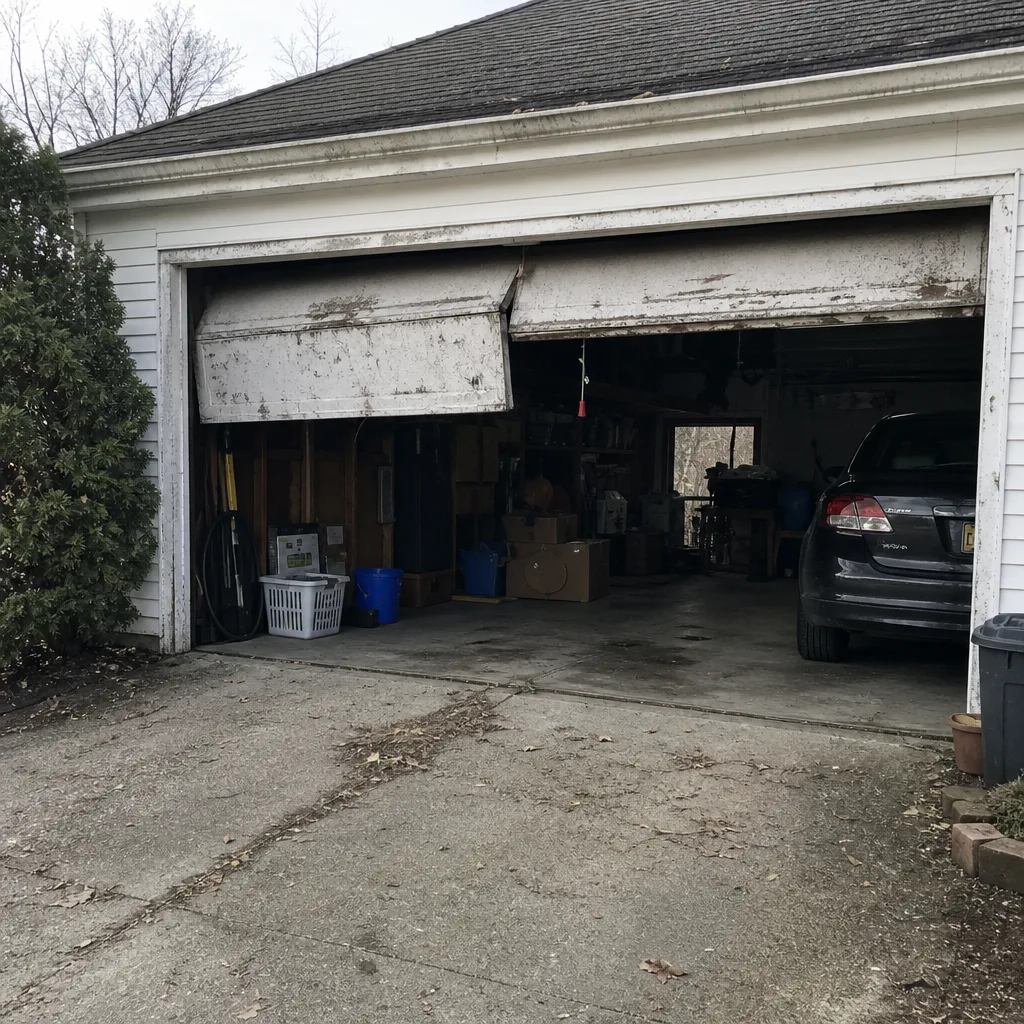 Before
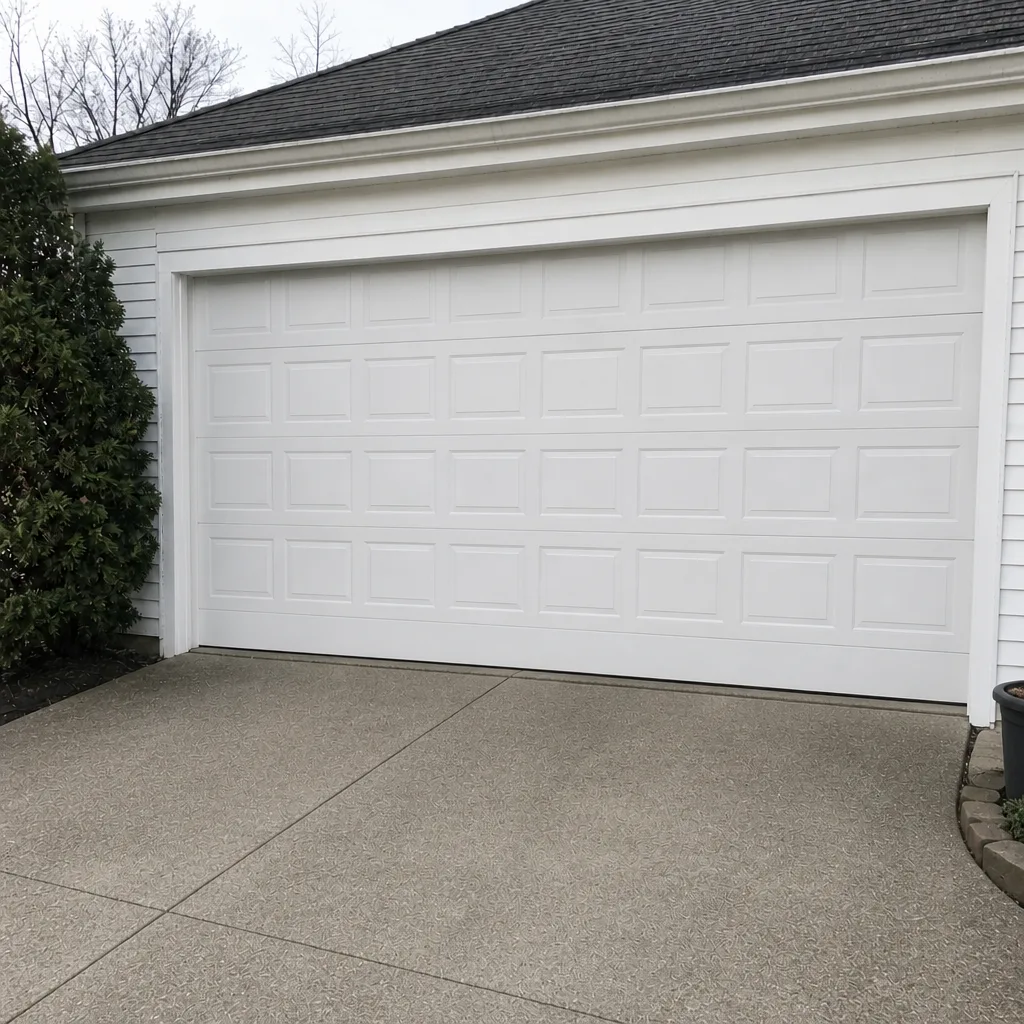 After
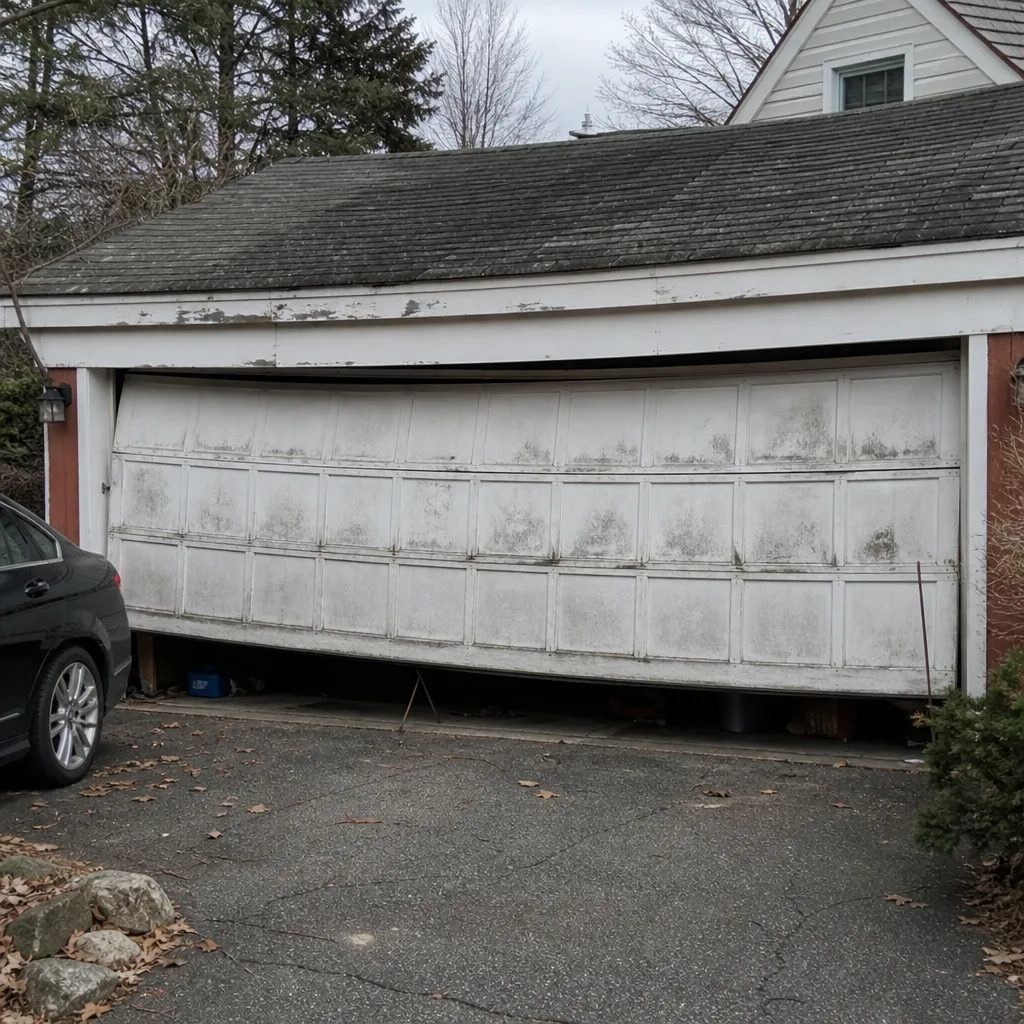 Before
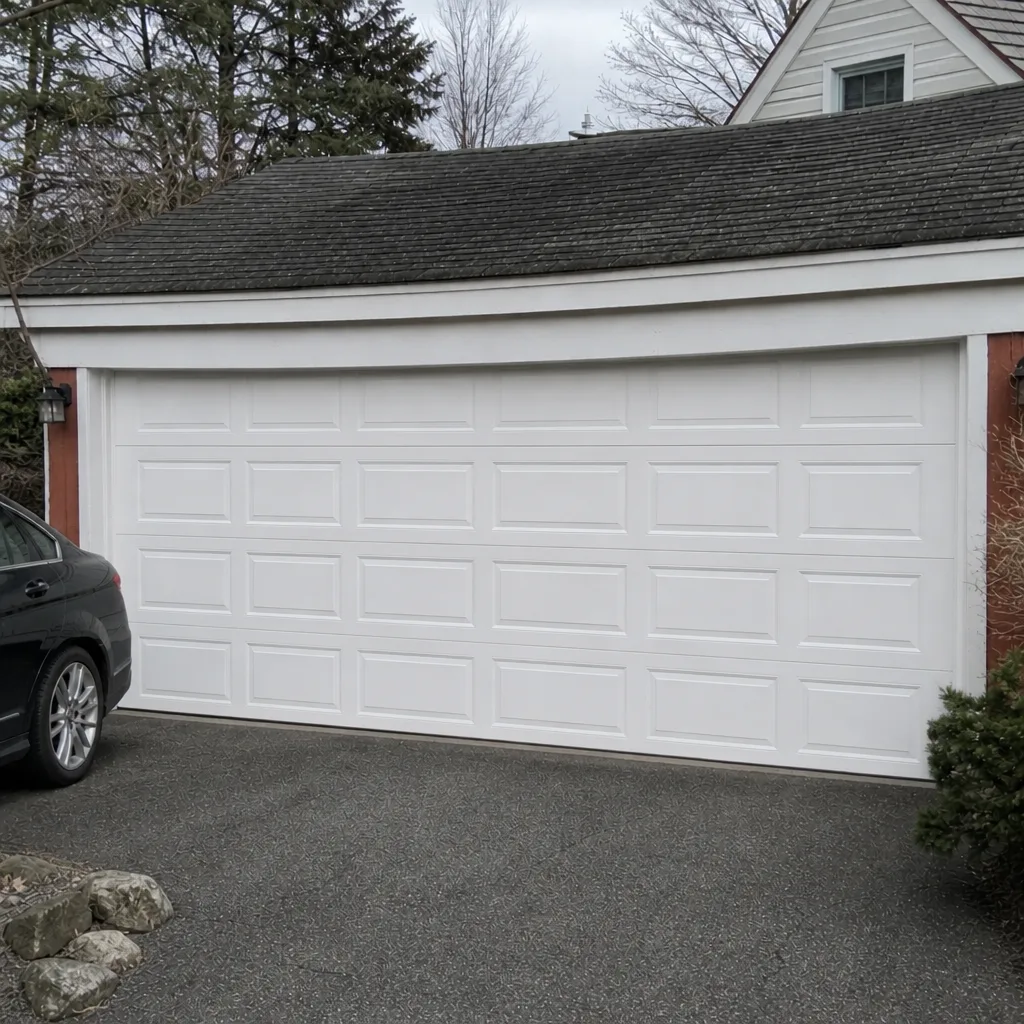 After
When to Call a Professional
Call a professional when the door won’t open or close, when you hear a loud bang from the spring area, when the door hangs crooked or comes off its track, when a cable is frayed or loose, or when the opener reverses, strains, or won’t respond to the remote after a fresh battery. Any of these points to stored tension, a damaged structural component, or an opener problem that needs diagnosis rather than guesswork. Don’t force a door that’s stuck, and don’t try to relieve spring tension yourself. Hyde Park Garage Door Repair Pros offers free estimates in Hyde Park, and our technicians have up to 12 years of experience across the brands most homes already have. Call (877) 716-7297 and we’ll tell you what the job involves and what it should cost before anyone starts.
Frequently Asked Questions
No, spring replacement isn’t a safe DIY job. Torsion and extension springs store enough energy to cause serious injury if released unexpectedly, and getting the right spring requires measuring the door’s weight and matching wire gauge, inside diameter, and length. Call (877) 716-7297 for a free estimate and we’ll handle it safely, usually the same day. Estimates are free.
Spring repair in Hyde Park typically costs $180 to $340 for one spring, with a matched pair usually replaced together at roughly double that. The written estimate sets the final price, and we agree the price with you before any work begins. Call (877) 716-7297 for a free estimate.
No, the price we quote is the price you pay, and we agree it before any work starts. If a repair uncovers something extra, like a worn cable alongside a failed spring, we explain it and get your approval before continuing. Call (877) 716-7297 for a free estimate on a job in Hyde Park.
Often yes. We offer same-day service for repairs and emergencies in Hyde Park, because a garage door that won’t close leaves your home open. Call (877) 716-7297 and we’ll let you know what we can do today. For a new door or a full replacement, we’ll schedule a free measure and give you a written price instead, since that work needs to be ordered.
It depends on the part. Kits for weather stripping, rollers, and hinges are a good value and safe to install yourself. Kits for springs, cables, or track work aren’t worth the risk, because the right part has to be sized to your door and the installation carries injury risk. Call (877) 716-7297 if you’re not sure which category your repair falls into.
The local pros we connect you with are licensed and insured as their state requires, and our technicians have up to 12 years of experience. We work on the brand you already have, whether that’s a LiftMaster opener, a Clopay door, or an older Craftsman unit. Call (877) 716-7297 for a free estimate.
The Bottom Line
The DIY versus pro question for garage doors comes down to one thing: whether the job involves stored mechanical force. Lubrication, weather stripping, sensor alignment, and remote programming are safe, useful, and worth doing yourself. Springs, cables, track realignment under tension, and bottom bracket work are not safe for a homeowner, no matter how thorough the tutorial, because the energy is already released the moment something slips. A parts kit can save money on the simple jobs but rarely on the dangerous ones, where correct sizing and correct technique are what make the repair last. If you’re in Hyde Park and you’re not sure which side of the line your repair falls on, call and ask. We’ll tell you honestly whether it’s a weekend project or a job for us.
When you’re ready, call (877) 716-7297 for a free estimate on any garage door repair, opener repair, spring replacement, or new installation in Hyde Park. We’ll diagnose the system you have, quote a price before we start, and get the door working again.
Written by the team at Hyde Park Garage Door Repair Pros.