Last updated November 21, 2026
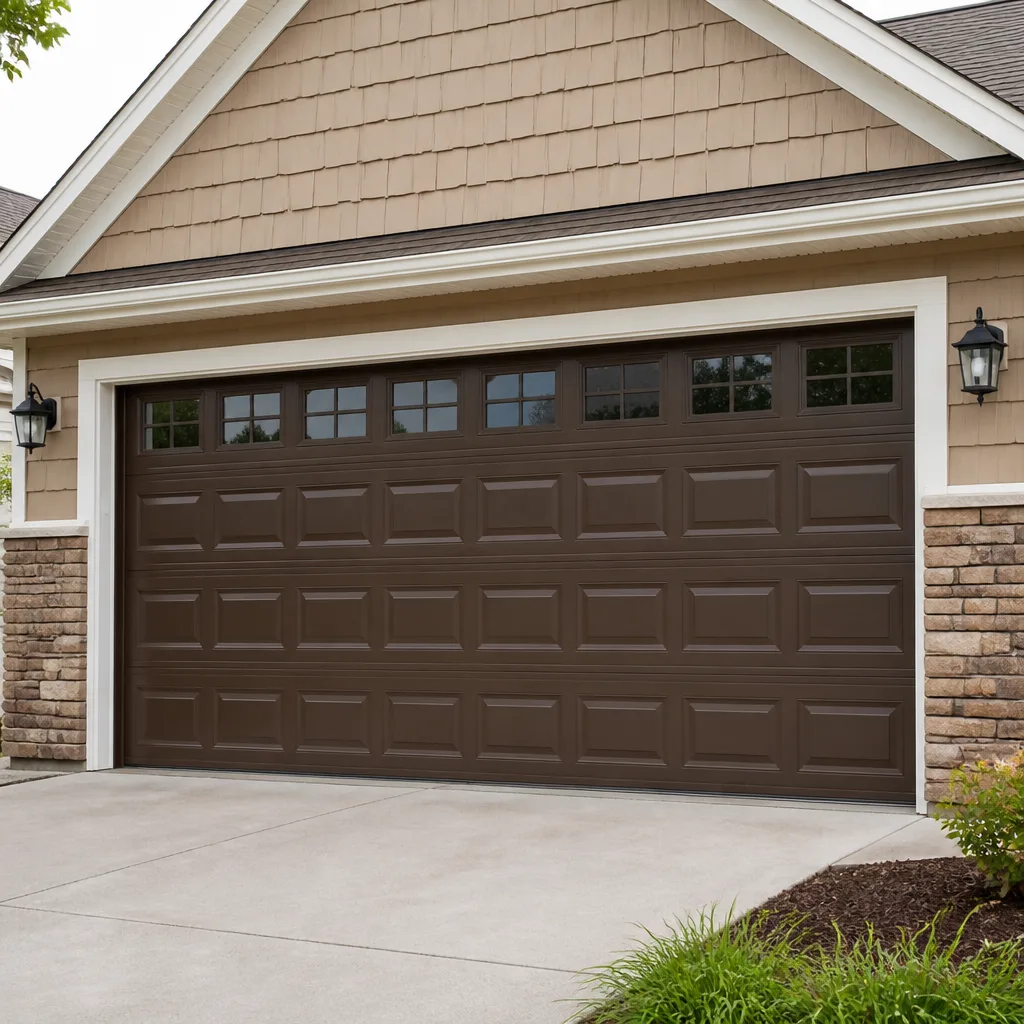 Raised-panel steel
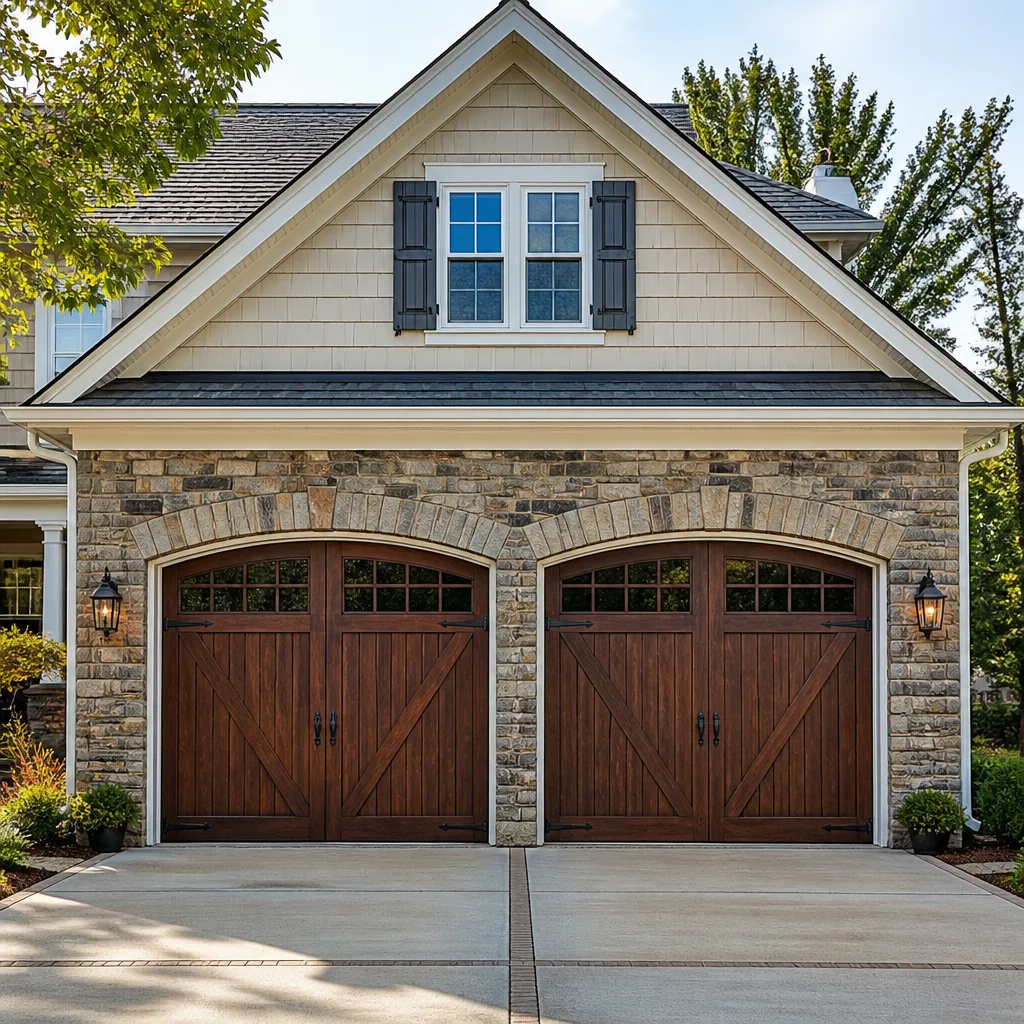 Carriage house
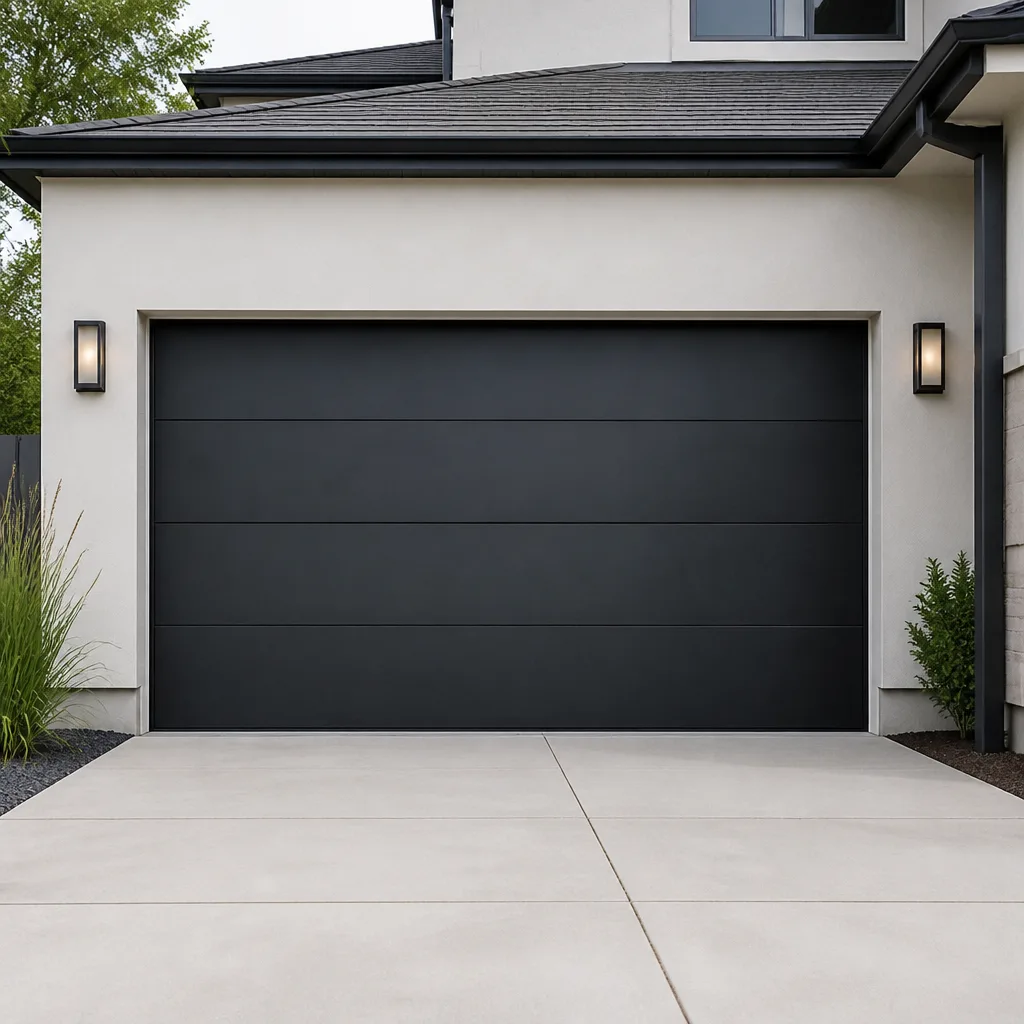 Modern flush
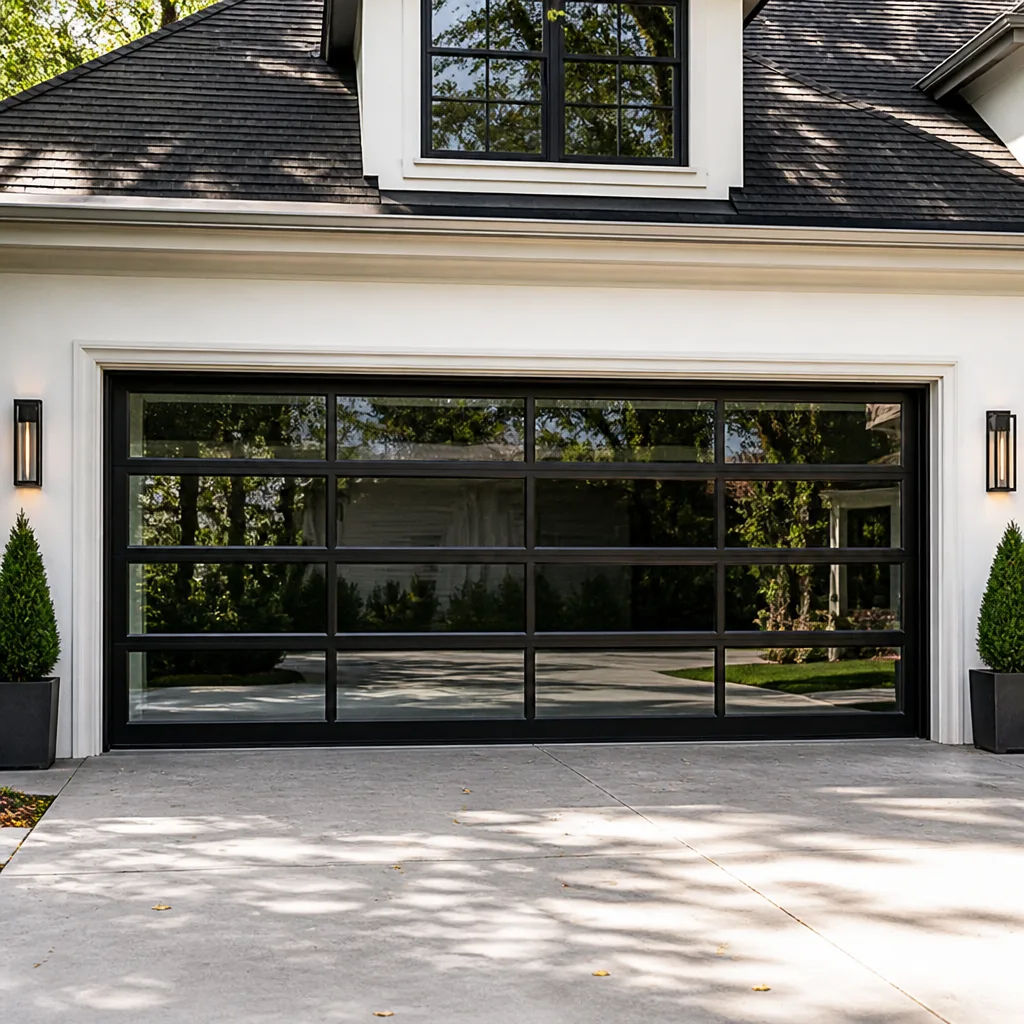 Full-view glass
 LiftMaster openers
 Chamberlain openers
Full 25-point door and opener safety check with every visit - springs, cables, rollers, tracks, and your LiftMaster or Chamberlain opener included
You get a price before we start. It does not change when the pro arrives.
Get your free estimateGarage Door Warning Signs: A Hyde Park Homeowner’s Reference Guide
A grinding noise and a scraping noise coming from the same garage door are caused by completely different parts, and treating them the same way will make one of them worse. Grinding usually means rollers or hinges are dry or worn. Scraping almost always points to the door rubbing its track. A homeowner who can tell those two apart saves money and time. That’s what this guide is for. It teaches you to read your door by symptom, not by guesswork, so you can describe what’s wrong before anyone arrives at your Hyde Park home. You’ll learn the sounds, the movements, and the visual red flags that tell you whether to call today or schedule within two weeks.
Quick Answer
Garage door warning signs fall into three groups: sounds (grinding, scraping, popping, clicking), movement problems (uneven travel, shuddering, slow reversal), and visual cues (cable slack, spring gaps, rust trails, panel cracks). Popping springs, snapped cables, and a door that hangs off-center are urgent – stop using the door and call a technician. Grinding rollers, a noisy opener, and minor rust are usually safe to schedule within two weeks. If you’re unsure which category a symptom belongs to, that uncertainty alone is a good reason to call (877) 716-7297 and describe what you’re hearing.
Styles & brands we work with
- Raised-panel steel
- Carriage house
- Modern flush
- Full-view glass
- LiftMaster openers
- Chamberlain openers
Table of Contents
- What Sounds Is Your Garage Door Making?
- Movement Warning Signs: What Uneven Travel Tells You
- Visual Red Flags You Can Check Without Touching Anything
- Urgent vs. Non-Urgent: Which Signs Mean Call Today?
- Why a Slightly Off-Center Door Is More Serious Than It Looks
- How Hyde Park Weather and Housing Shape Wear Patterns
- Warning Signs by Brand and System Type
- How to Describe a Problem Before You Call
What Sounds Is Your Garage Door Making?
Sound is the earliest diagnostic signal a garage door gives you, and each sound traces to a specific mechanical source. In our experience, homeowners often describe every noise as “it’s just loud,” which is like telling a mechanic the car “makes a funny sound.” The four common sounds mean four different things, and only one of them is usually a same-day concern.
- Grinding – Metal-on-metal contact from dry or worn rollers and hinges, or a bearing that has lost its grease. It gets worse with cold weather because lubricant thickens. This is usually a maintenance item, not an emergency, but left alone it accelerates wear on the whole system.
- Scraping – The door is rubbing against the track. Often the track has been nudged out of alignment, or a roller has come loose from its hinge. Scraping tends to worsen quickly because friction begets more friction, and it can score the door’s finish. Schedule it soon.
- Popping – A sharp pop or bang, especially when the door starts up, is a spring under stress. Torsion springs can snap without further warning, and that release of stored energy is dangerous. Stop using the door and call a technician.
- Clicking – A rapid clicking near the opener unit itself usually points to the opener’s relay or logic board rather than the door. It often means the opener is trying to run but can’t complete its cycle. That’s an opener repair question, not a door question.
A door that squeals or squeaks on the way up is usually a lubrication issue on the rollers and hinges, or a worn nylon roller. That one sits in the non-urgent column. The key distinction: sounds coming from the door itself and sounds coming from the opener box above your head need different parts and different expertise. Our technicians have up to 12 years of experience separating the two, and getting that diagnosis right the first time is most of the job.
Movement Warning Signs: What Uneven Travel Tells You
A garage door should travel up and down like it’s on rails, because it is. Any deviation from smooth, even motion is telling you something specific about balance, alignment, or the opener’s force settings. Watch your door through one complete cycle and note what you see.
- Watch the gap at the bottom. If the door rises faster on one side, or one edge lags, the torsion system or the cables are out of balance. An unbalanced door puts uneven strain on one spring or one cable, and that’s the one that fails first.
- Look for shuddering on descent. A door that shudders or jerks on the way down usually has a bent track section, a worn roller, or a hinge that’s pulling loose. Shuddering wears the rollers and the track at the same time.
- Test the reverse. Place a piece of wood flat under the door and close it. The door should reverse on contact, not after a delay and not with a heavy crush. A door that’s slow to reverse is a safety-setting problem, and that belongs in the urgent column regardless of what else is happening.
- Listen for the door hitting bottom hard. If the door slams into the floor instead of easing down, the down-limit setting on the opener is off. It’s a small adjustment with a real consequence for the door’s panels and your weather seal.
Movement problems live in that uncomfortable middle space where they’re not visibly broken but they’re clearly not right. In Hyde Park’s older housing stock, especially the two- and three-family homes around Cleary Square and Fairmount, we routinely meet doors that have been out of balance for years. The homeowner has adapted to it. The springs haven’t. Balance issues put cumulative stress on high-tension components, and that’s the connection worth remembering. If you’re not sure whether your door is balanced, that’s a good reason to have it looked at before small things compound.
Visual Red Flags You Can Check Without Touching Anything
You can spot several serious problems from the floor without touching a spring, a cable, or a moving part. The rule here is look, don’t touch. High-tension springs and the cables under them store enough force to cause real injury.
- Visible spring gap. A torsion spring is a coiled steel bar. If you see a gap or separation anywhere along the coil, the spring is broken or about to fail. Do not run the door. This is a hard stop.
- Cable slack. Cables run along the sides of the door. If either one looks loose, kinked, or has come off its drum, stop using the door. A slack cable under load can whip when it releases.
- Rust trails. Rust streaks on the tracks, hinges, or the bottom of the door panels tell you where moisture has been sitting. In Hyde Park, snowmelt tracked in from the driveway and splash-back at the door’s base are the usual culprits. Rust on the bottom section is often the beginning of a panel problem.
- Panel stress cracks. Hairline cracks near the hinges or across a panel mean the section is weakening. A cracked panel under spring tension can deform or fail. Small cracks are cheap; replacement panels are not.
- Hinge pull-out. If the hinge fasteners look raised or the wood around them is split, the door’s structure is compromised at that point. It’s a small fix early and a big one later.
One more that’s easy to miss: check that the tracks on both sides are still parallel to each other. If one track has been bumped by a car bumper, a bicycle, or the edge of a snow shovel, the door will rub and the rollers will wear unevenly. It’s the kind of thing our technicians find constantly in Hyde Park, where garages are tight and driveways are short.
Urgent vs. Non-Urgent: Which Signs Mean Call Today?
Most garage door symptoms can wait a week or two. A few cannot, and the line between them is pretty clear once you learn it. When in doubt, err toward the urgent column – nobody was ever harmed by having a professional take a look.
Call today (stop using the door if you can)
- A loud pop or bang from the spring, or a visible gap in a spring coil
- A snapped or slack cable
- A door hanging crooked, off-center, or stuck partway up
- A door that won’t reverse on contact or crushes the test object
- Panels that are bowing under spring tension
- A door that has come completely off its track
Schedule within two weeks
- Grinding or squealing during travel
- A noisy, sluggish, or sometimes-unresponsive opener
- Minor rust on tracks and hinges
- Rattling or vibration without visible damage
- A door that doesn’t quite close flush at one corner
If you’ve stopped using a garage door, describe that to whoever answers. In an urgent case, calling (877) 716-7297 with “popping sound, don’t want to use the door” tells us what we need. Repair work in Hyde Park can often be handled the same day when you call early, and a free estimate means you know the price before anyone starts. That written number is what you pay for the agreed work.
Why a Slightly Off-Center Door Is More Serious Than It Looks
The single most underrated warning sign is a door that’s a little bit crooked. Homeowners see it and shrug – it’s been like that for a while, and it still opens. But a door that’s off-center is telling you the torsion system has stopped balancing the door’s weight, and that failure puts the whole door’s load on one cable or one hinge. That’s the one that fails next, and usually all at once.
The physics is simple. Your garage door is heavy, and the springs are what make it feel light. When one spring weakens or the cable tension shifts, the door’s weight is no longer shared evenly across two sides. The door rides higher on one side than the other. The apparently minor crookedness is actually a visible symptom of that imbalance.
Here’s what tends to happen next, in order:
- The door drags on one track, wearing the roller and scoring the track
- The loaded cable stretches and eventually rusts or snaps
- If the door is up when the cable goes, the door can drop suddenly
That’s why a door that looks “just a little crooked” deserves a look, not a shrug. Our technicians check balance, spring tension, and cable condition before we sign off on any repair – because a door that opens isn’t the same as a door that’s safe. In older Hyde Park garages, where the door frame and the tracks may have shifted over decades of settling, this kind of drift is common. Checking it costs nothing. Ignoring it can be expensive. For a hands-on diagnosis, our garage door repair service covers this kind of check.
How Hyde Park Weather and Housing Shape Wear Patterns
Garage doors age differently depending on where they live, and Massachusetts gives a door a fairly demanding routine. Cold winters, wet springs, hot humid summers, and debris that arrives with every season all leave their signatures on a door’s components. Knowing the local pattern helps you know where to look.
Cold is the biggest factor. Grease in rollers and hinges thickens below freezing, which is why a door that’s been quiet all fall suddenly groans in January. Torsion springs lose some tension in cold weather, and the metal itself becomes more brittle – that’s part of why snapping springs cluster in the coldest months. The door’s bottom weather seal hardens and cracks, letting water in at the base, which is where most rust on Hyde Park doors starts.
Meltwater is the second factor. Snow and slush tracked in or splashed up onto the bottom panel freeze overnight and thaw again. Repeated wet-dry cycles on the bottom section of the door are hard on paint and steel, and after a few seasons you’ll see rust on the bottom rail and along the hinges. If you’ve ever wondered why the bottom of your door looks worse than the middle, that’s why.
Summer heat, less obviously, affects the opener. Garage interiors get hot, and opener logic boards and motors are sensitive to that. A weak opener that works fine in spring may start hesitating in August. In the older housing stock around Hyde Park, many garages sit under the house and warm up more than a freestanding garage does. If you own a Craftsman or Wayne Dalton opener unit that’s been reliable for years, checking it seasonally makes sense. If it starts to hesitate, that’s a sign for garage door opener repair before the motor fails altogether.
Go outside in the fall and clear leaves, twigs, and grit from the tracks. Debris in the track is one of the most preventable causes of scraping and roller wear, and it’s a five-minute job.
Warning Signs by Brand and System Type
Most garage doors in Hyde Park are one of a handful of familiar systems, and each has its own most-likely failure point. Knowing what’s already in your garage helps you narrow down which symptom means what.
- LiftMaster and Chamberlain openers – Both are common in Hyde Park, and both are known for their safety reverse sensors. If your door reverses for no reason, or won’t close at all, that sensor alignment issue is the first thing to check. A properly installed sensor is supposed to beep or flash when out of line; if yours slams sometimes and feels fine other times, the sensor aim has drifted.
- Genie openers – Screw-drive and belt-drive units. When they age, a clicking or chattering from the opener head often means the drive gear or limit switch has worn. That’s a serviceable part, not a reason for a new opener.
- Craftsman openers – Extremely widespread in older homes. Many Craftsman units still working fine today are legacy models without modern features, and their weak spot tends to be the wall-mounted opener control and its wiring rather than the opener itself. A door that sometimes opens a few inches and stops is usually a limit, sensor, or control issue, not a failing motor.
- Amarr and Raynor doors – Both are common on residential doors, and both are built around a steel panel system with hangers at each hinge. Panel stress at the hinges and bottom rails is the usual wear point as the door ages. Those are also the panels that are cheapest to replace early and hardest to replace late.
If you’re not sure of your brand, that’s not a problem. Our technicians service 8 of the most common garage door and opener brands on the market, including LiftMaster, Chamberlain, Genie, Clopay, Amarr, Wayne Dalton, Craftsman, and Raynor. The diagnosis matters more than the badge. If a door is going to need full replacement, we’ll tell you that honestly rather than repair a failing system twice. Our garage door installation service handles the full measured process – a free measure and a written price before any work is ordered. Call (877) 716-7297 to schedule.
How to Describe a Problem Before You Call
You don’t need to diagnose your door. You do need to describe it, and the better you describe it, the better any repair goes. A homeowner who says “my door won’t close” gets a general conversation. A homeowner who says “it goes up fine but reverses about a foot off the floor and clicks twice first” gives a technician a specific place to start. Here’s what to have ready.
- The sound, in words. Grinding, scraping, popping, clicking, squealing, or rattling – pick the closest and say when it happens. On opening? On closing? At the start?
- What the door does. Does it move evenly? Does it stick at one point? Does it reverse before reaching the floor, and at what height?
- The opener’s behavior. Does the opener light flash when it fails? Do the buttons on the wall and the remotes behave differently? Does the opener try to run and stall?
- A rough brand. LiftMaster, Chamberlain, Genie, Clopay, Amarr, Wayne Dalton, Craftsman, Raynor – one of these is likely to match. If you don’t know, describe the label or the shape of the controls.
- Any recent event. A car bumper tapping the door, a bike falling against the track, a power cut – anything that could have thrown something out of alignment.
That list takes about two minutes and it lets the person on the phone book the right kind of visit for you. Parts access matters for this too. We supply garage door parts directly, so a repair visit isn’t waiting on a component being ordered from a third party. In Hyde Park, that often means the difference between a fix in the next few days and a fix next week. For anything that turns into a bigger conversation about the whole door, start with Hyde Park Garage Door Repair Pros and we’ll walk through what makes sense.
Common Mistakes to Avoid
- Treating every noise the same. A grinding roller and a scraping track need different parts and different fixes. Adjusting the track for a roller problem just moves the wear somewhere else.
- Lubricating a spring. Springs should not be grease-packed by a homeowner. A spring that pops or shows a gap is a trained-professional job, full stop. Springs are not a DIY job and shouldn’t be treated like one.
- Adjusting the opener’s force setting to compensate for a binding door. Raising the force setting to get past a sticking point is like pressing harder on a stuck door – it hides the real problem and strains the opener’s motor and gears.
- Ignoring a door that’s a little off-center. That’s an early warning about cable and spring balance. It’s the one warning that gets consistently dismissed because it hasn’t failed yet.
- Forgetting the seasonal check. Cleaning out the tracks and checking rollers and hinges once a season, especially before winter, prevents the majority of the avoidable fixes we see in Hyde Park.
- Running the door when there’s a visible cable or spring problem. A slack cable or a broken spring doesn’t fix itself, and the door’s weight can cause a sudden drop. Use the manual release only as directed when the spring has failed, and never stand under the door while you’re working.
- Waiting until a door fails to learn what brand it is. Check your opener and door labels while things are working fine. That information saves time when something does go wrong.
See the difference
 Before
 After
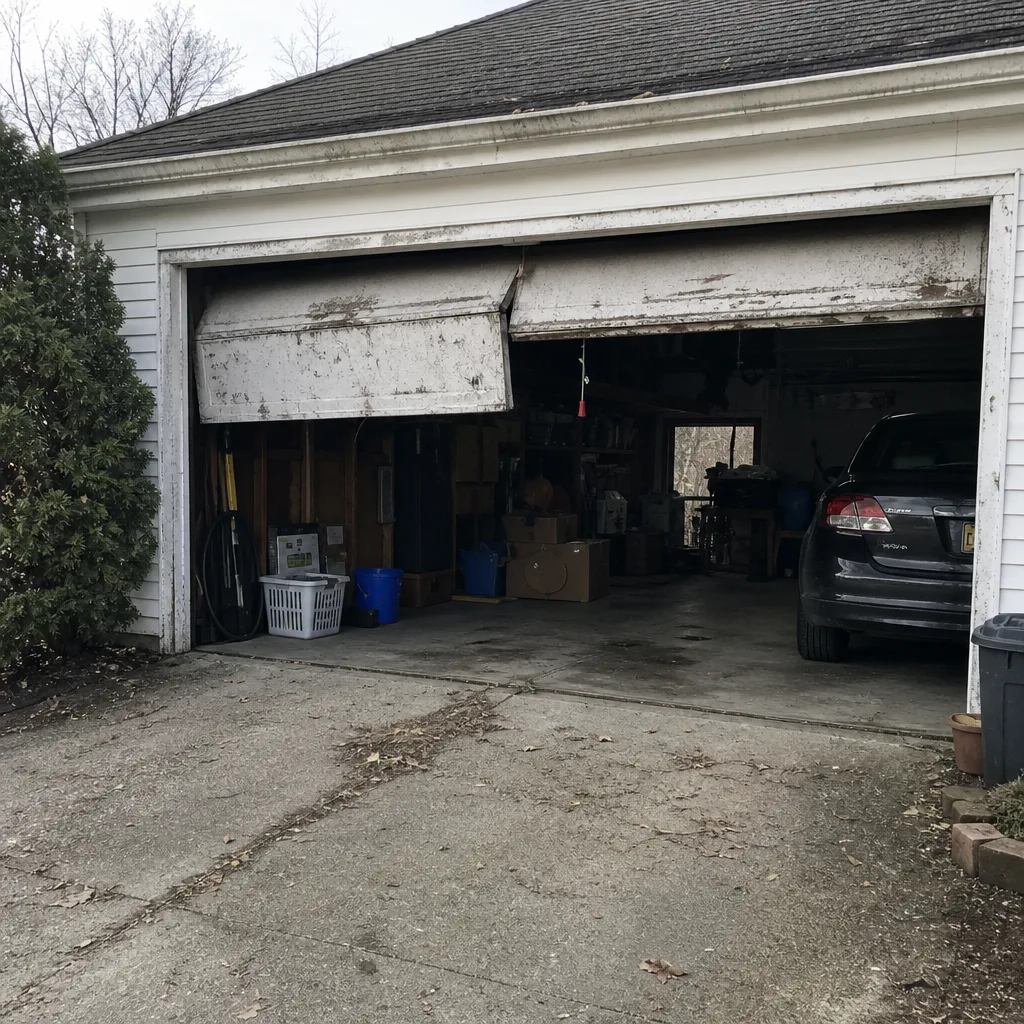 Before
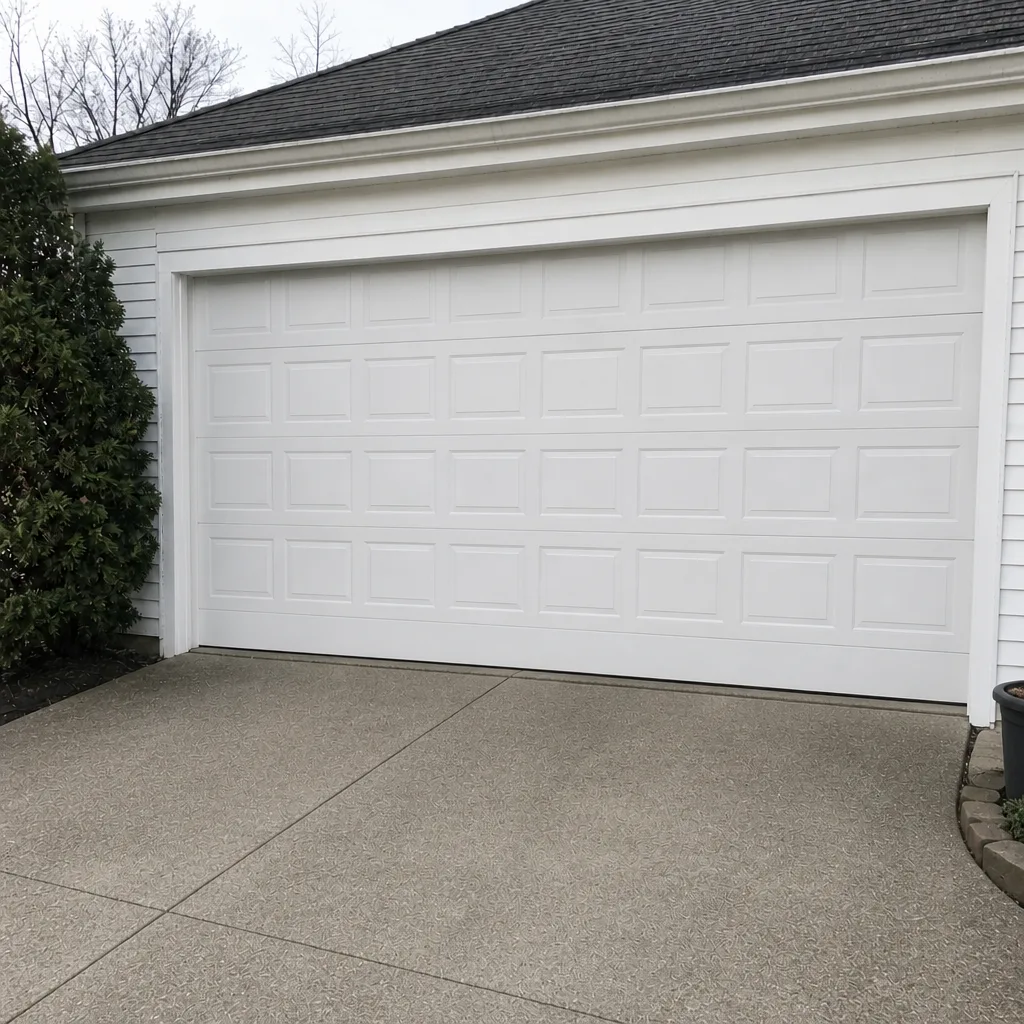 After
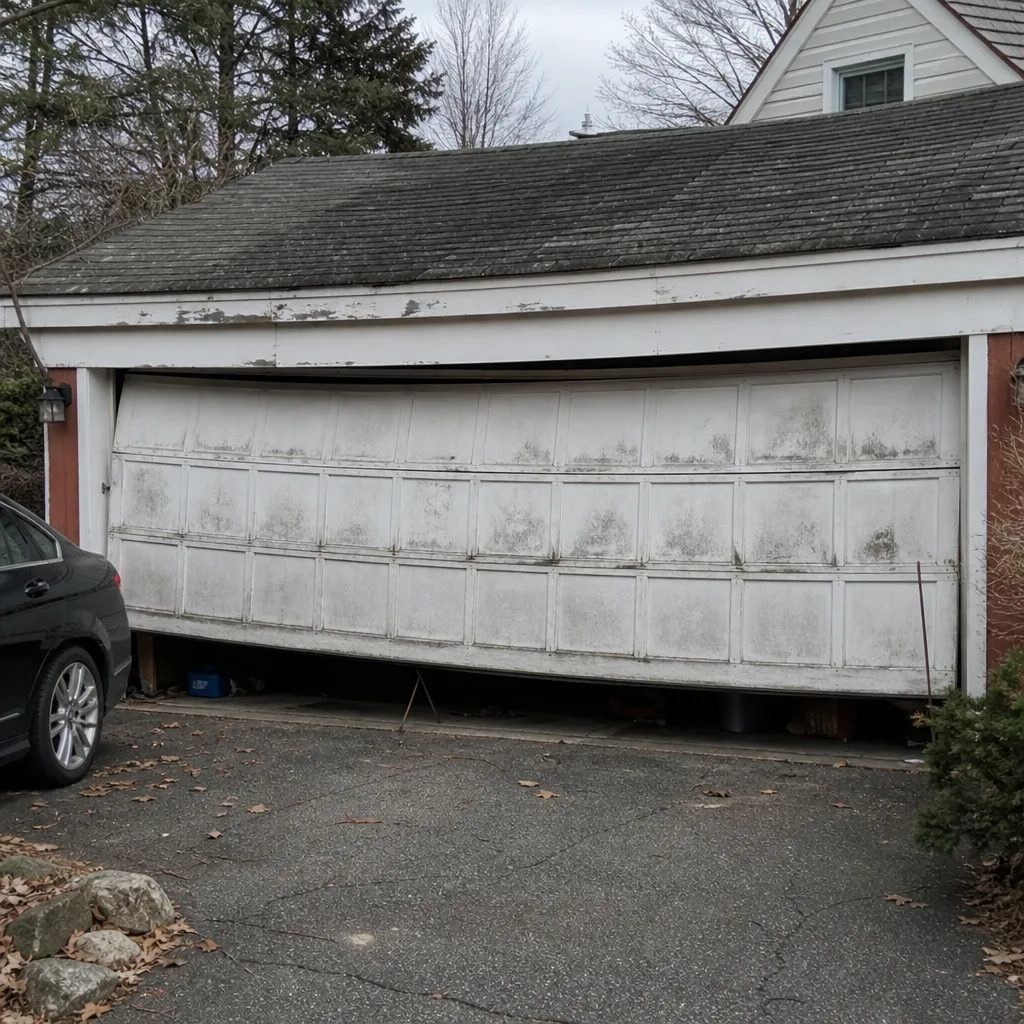 Before
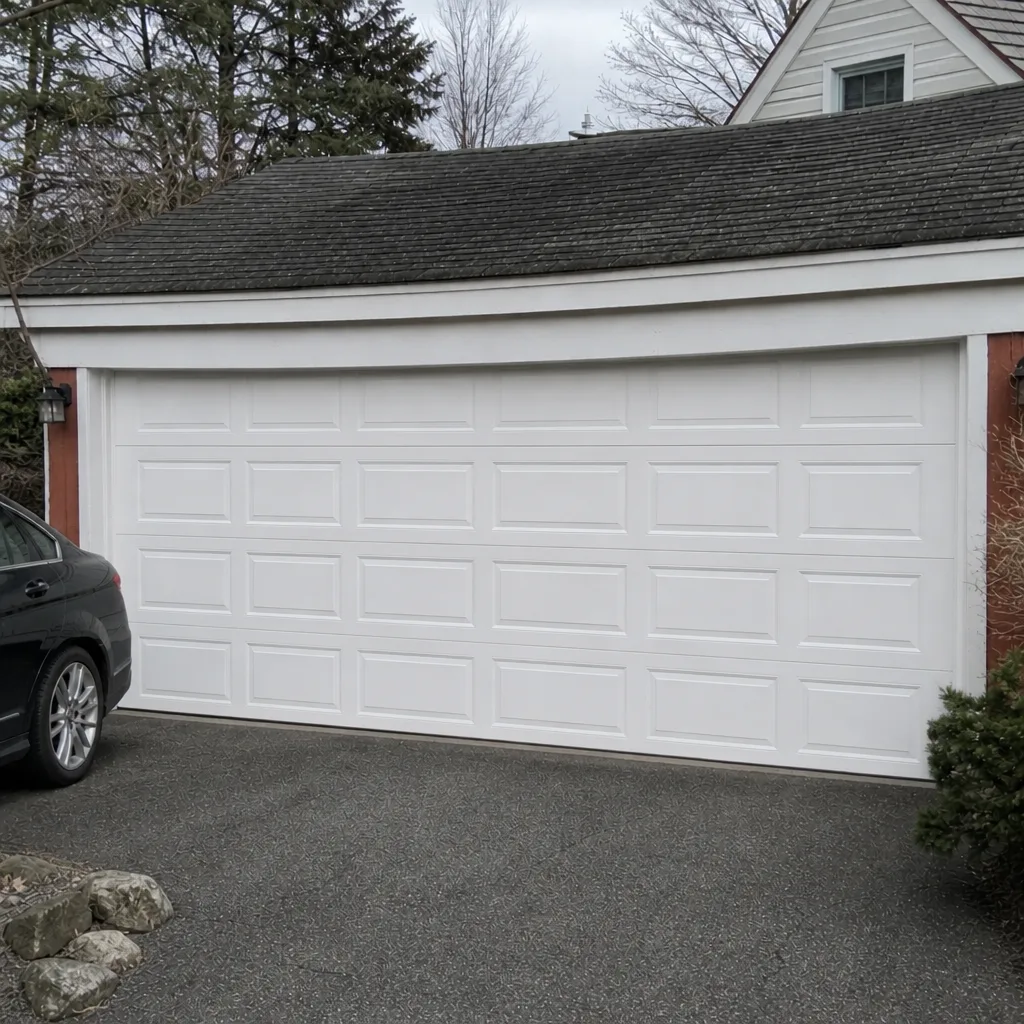 After
When to Call a Professional
Call a professional if you’re hearing a pop from the spring, if the door is hanging crooked, if a cable is slack or snapped, if the door won’t reverse on contact, or if the opener tries to run and can’t complete a cycle. Those are the situations where guessing costs money, and in the case of springs and cables, they’re where guessing costs safety. A trained professional should handle anything involving high-tension components, electrical connections inside the opener, or a door that needs to come off its tracks. Beyond that, if you’ve done the visual checks in this guide and something still feels off, that feeling is worth a visit.
Hyde Park Garage Door Repair Pros offers free estimates in Hyde Park. Call (877) 716-7297 and describe what you’re seeing. Our technicians have up to 12 years of experience across the brands we service, and the written estimate we give you is what you pay for the agreed work.
Frequently Asked Questions
The most serious warning sign is a sharp popping sound from the spring, or a visible gap in a spring coil. It means the torsion system has failed or is failing, and the door should not be used until it’s inspected. A slack or snapped cable is right behind it. Both involve high-tension components; call a technician rather than run the door again. Call (877) 716-7297 and describe the sound – we’ll tell you how quickly it needs attention.
Yes, but it’s not urgent. A door that grinds, squeaks, or rattles but still opens and closes has a worn part somewhere, usually a roller or hinge, and fixing it early is cheaper than fixing the door that wears around it. Schedule within a week or two. Call (877) 716-7297 for a free estimate and describe the sound.
Sometimes. A door that’s slightly off-center or that shudders on the way down often points to a balance issue caused by spring or cable wear. That’s what makes it worth checking now rather than later, since balance issues can turn into a sudden failure. If a door looks crooked, don’t use it and call (877) 716-7297.
Treat it as urgent. A door that won’t reverse on contact is a safety setting problem, and it should not be used by anyone until it’s adjusted. Don’t try to fix the opener’s force setting yourself. Call (877) 716-7297 for a same-day visit – we can check the sensor and reverse settings in one trip.
Usually not. Most warning signs point to worn parts – rollers, hinges, springs, cables, or opener components – and repair is the right first step. Replacement makes sense when panels are structurally damaged or when a door is failing repeatedly. If you’re getting an estimate in Hyde Park, we’ll tell you which it is honestly, with a written price before any work starts. Call (877) 716-7297.
At least twice a year – once before winter and once in spring – plus any time you hear a new sound or see a door moving unevenly. A seasonal check covers balance, spring condition, roller and hinge wear, and track alignment, and it’s where most of these signs get caught early. If it’s been more than a year, call (877) 716-7297 and book a check-up.
The Bottom Line
Garage doors give you warning before they fail. The trick is knowing which warning you’re looking at. Grinding is a roller or hinge problem; scraping is a track problem; popping is a spring problem; clicking is usually the opener. Off-center doors, slack cables, spring gaps, and rust trails are all visible signs you can check without touching anything dangerous. Learn the line between “call today” and “schedule within two weeks,” clear your tracks before winter, and describe the sound accurately when you call. In Hyde Park, that’s the difference between a small repair and a bigger one.
If something on your door doesn’t look or sound right, call Hyde Park Garage Door Repair Pros at (877) 716-7297 for a free estimate. We’ll listen to what you describe, check the door, and tell you plainly what needs fixing.
Written by the team at Hyde Park Garage Door Repair Pros.